In the world of tea production, choosing the right packaging machinery is crucial for ensuring the quality and efficiency of your operations. Here are some important factors to consider.
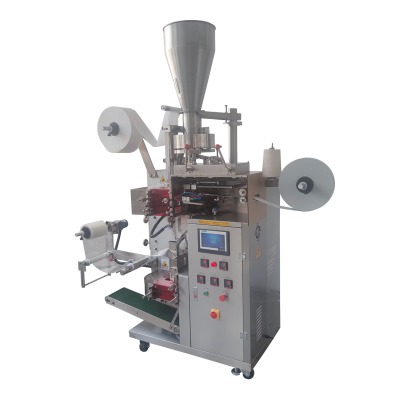
First and foremost, assess your production scale. If you have a small-scale operation, a compact and affordable packaging machine might be sufficient. On the other hand, if you are a large-scale producer, you'll need a more powerful and high-capacity machine.
Next, think about the packaging types you require. There are various options available, such as tea bags, loose leaf tea packaging, and vacuum packaging. Each type has its own set of requirements and characteristics.
Budget is also a significant consideration. Determine how much you are willing to invest in packaging machinery. Remember to balance cost with quality and functionality.
Different types of packaging machinery offer distinct advantages. For example, automatic tea bag packaging machines are efficient and can handle large volumes. Loose leaf tea packaging machines may offer more flexibility in terms of packaging sizes and styles.
In conclusion, choosing the right tea packaging machinery requires careful consideration of production scale, packaging types, and budget. By taking these factors into account, you can make a wise decision that meets your specific needs and helps your tea business thrive.
We will uphold the enterprise spirit of "customer first, pursuit of excellence", adhere to quality first and management and technological innovation, and shoulder the historical responsibility of "new ideas, new opportunities, new challenges" given to us by the times. We have accumulated a lot of resources and worked hard to meet new challenges and develop Xintiandi into a star enterprise with sustainable development and excellent competitiveness.
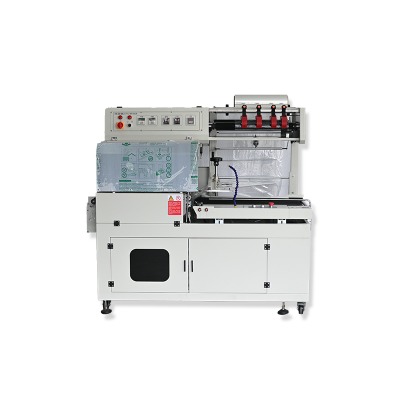
When it comes to choosing a tea film sealing machine, there are several crucial factors to keep in mind.
Sealing speed is essential, especially if you have a high production volume. A faster machine can increase your efficiency and output. However, don't sacrifice quality for speed. Ensure that the machine can provide a consistent and reliable seal.
The quality of the seal is equally important. A well-sealed package not only protects the tea but also enhances its presentation. Look for a machine that can produce tight seals without leaks or damage.
Equipment stability is another key consideration. A stable machine will operate smoothly and reduce the risk of breakdowns and maintenance issues. Check for features like sturdy construction and reliable components.
Now, let's talk about some common purchase mistakes. One mistake is focusing solely on price. While it's important to stay within your budget, don't compromise on quality and functionality. Another mistake is ignoring the reputation and customer reviews of the manufacturer. Do your research and choose a reputable brand with a track record of producing reliable equipment.
In conclusion, when purchasing a tea film sealing machine, pay attention to key factors such as sealing speed, sealing quality, and equipment stability. Avoid common purchase mistakes to ensure that you get a machine that meets your needs and helps your tea business succeed.
Adorable and eye-catching appearance, making them stand out on store shelves.
Convenient for single-serving brewing, especially in offices or while traveling.
Often come in airtight packaging, which helps keep the tea fresh.
Cons:
Have a relatively small capacity, so they may not be suitable for heavy tea drinkers.
The shaping process may affect the integrity of the tea leaves to some extent.
Can be more expensive due to their elaborate packaging and production.
In conclusion, the choice of tea packaging shape depends on your personal preferences, usage habits, and priorities. Whether you value portability, brewing experience, collectibility, or freshness, there is a tea packaging shape out there that can meet your needs. Consider these factors when choosing your next batch of tea to ensure you get the best possible product.
Today, bridge mills are an indispensable tool for manufacturers in industries like aerospace, automotive, energy, and heavy machinery. Bridge mills are increasingly used as engineering designs become more complex and the need for enhanced stability, precision and flexibility to machine large and heavy workpieces to extremely tight tolerances continues. As a rigid overhead bridge structure with multi axis capabilities, bridge mills offer high precision cutting compared to traditional knee mills or gantry mills.
In this article, we will look at how bridge mills can produce continuous production of complex components that can’t be made with smaller machines. Whatever your R&D work or high volume manufacturing needs, bridge mills provide a flexible solution to maximize productivity and minimize errors.
What is a Bridge Mill?
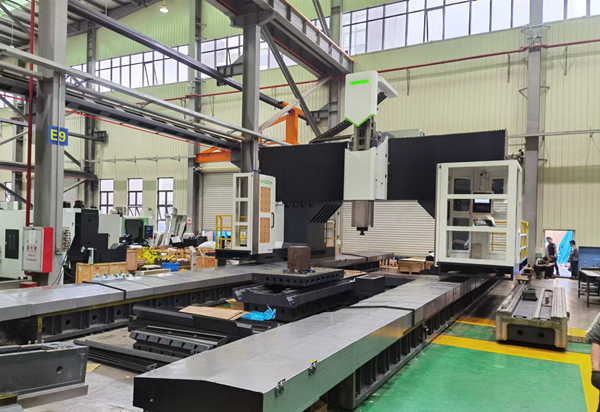
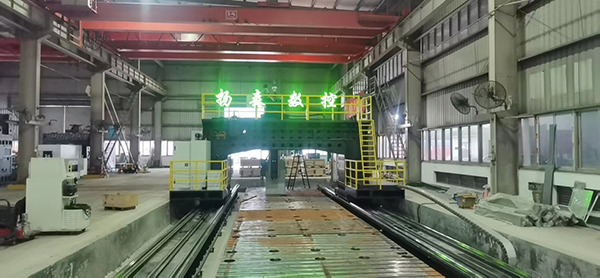
A bridge mill uses a huge overhead bridge assembly to support the spindle and worktable instead of a column or gantry. The spindle is held as it moves in X, Y, and Z axes by the bridge as a rigid support arm and the worktable below is positioned relative to the cutting tool.
This overhead arrangement leaves the entire area beneath the bridge open for oversized parts and assemblies, allowing much larger workpieces than could fit on a traditional vertical mill. Bridge mills derive their name from the bridge-shaped beam that spans the work area.
The key components of a bridge mill are:
● Bridge - The large overhead beam that supports the spindle slide and provides damping against vibrations. It contains the mechanisms to position the spindle in X and Y.
● Spindle - The rotating shaft that holds the cutting tool. It is powered by a motor inside the spindle slide with up to 50 hp. High torque spindles allow fast removal of material.
● Table - The large stationary or moving platform that supports the workpiece. It provides a precision mounting surface and T-slot holds for clamps and fixtures.
● Column - A fixed vertical member at one end that helps support the bridge. The column may house controls or services.
● Saddle - The moving transverse component mounted to the underside of the bridge. It positions the spindle slide in the Y-axis across the width of the table.
● Spindle Slide - The carriage assembly that traverses back and forth along the bridge in the X-axis, positioning the spindle over the workpiece.
Compared to gantry or knee mills, bridge mills are significantly heavier and bulkier, with a main bridge that is much more rigid thanks to its continuous cast iron or welded steel overhead design. This mass and stability is crucial for absorbing cutting forces and dampening vibration that could compromise precision.
The rigid construction also minimizes deflection of the spindle during aggressive material removal, enabling much tighter tolerances. When machining large components made of tough materials like steel or titanium, the stability of a bridge mill is vital to achieve chatter-free results. Their overhead configuration also allows practically unlimited workpiece sizes.
Types of Bridge Mills
Bridge mills are available with different axis configurations and levels of automation to suit a wide range of applications:
2-Axis Bridge Mills
The simplest bridge mill design has two linear axes allowing motion in the X (longitudinal) and Y (transverse) directions. This provides positioning of the workpiece beneath the spindle for basic 2D operations like facing, drilling, boring, and end milling of flat surfaces. While limited in versatility, 2-axis bridge mills are an affordable option for high-volume production of large but basic parts, as their range of motion is sufficient for straightforward machining.
3-Axis Bridge Mills
A 3-axis bridge mill adds a Z-axis that raises and lowers the spindle vertically. This permits angled milling operations like helical interpolation, allowing the machining of bevels, tapers, contours, and angled features. The additional axis provides the ability to machine in 3 dimensions instead of just 2. Manufacturers gain greater flexibility to produce more complex components with a 3-axis bridge mill.
5-Axis Bridge Mills
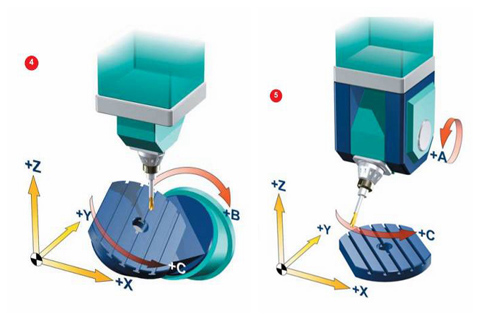
On a 5-axis bridge mill, the spindle head tilts and rotates on two additional rotary axes in addition to moving linearly in X, Y, and Z. This enables the spindle to approach the workpiece from practically any orientation rather than just vertically. 5-axis motion facilitates high-precision machining of complex 3D surfaces and contours in a single setup, saving tremendously on time and cost. Many aerospace and impeller components require 5-axis milling due to their intricate blended or sculpted geometries.
Automated Bridge Mills
Modern computer numerical control (CNC) bridge mills allow all machining operations to be precisely programmed ahead of time. This allows push-button automation of repetitive cutting procedures with minimal operator intervention. The computer control precisely choreographs and executes tool paths for mass production. Automated tool changers, pallet changers, and robotic part load/unload systems can further enhance productivity for lights-out manufacturing across multiple shifts.
Key Features and Components of Bridge Mills
Massive Work Area
The cantilevered overhead design of a bridge mill leaves the entire area beneath the spindle open for oversized parts and assemblies. Common table sizes range from 5 x 10 ft up to 20 x 60 ft for gigantic components weighing over 100 tons. Huge motors drive the table through precision roller or hydrostatic ways. This expansive work zone minimizes setups by allowing batch machining of multiple large parts or entire weldments in a single fixture.
Rigid Bridge Assembly
Weighing up to 100,000 lb, the continuous overhead bridge utilizes a rigid box-way construction that resists deflection and damps vibration far better than jointed column or gantry mills. This stability prevents tool chatter, allows heavier cuts, and enables highly accurate motion of the spindle carriage across wide spans. Even minimal vibration can degrade precision and surface finish.
Powerful Spindles
High torque spindles up to 50 hp are common on bridge mills to power through hard alloys and remove material quickly from large parts. Higher rotational speeds up to 15,000 rpm provide ideal cutting speeds for optimized tool life and surface finish. The spindle cartridge is preloaded for thermal stability and minimal runout.
Precise Positioning
Ballscrews on the X, Y, and Z axes have high lead precision for accurate positioning and repeatability within 0.001”. Backlash is eliminated through preloading. Precision ground box ways or linear guides maintain tight geometrical tolerances when moving heavy components.
Multi-axis Capability
Optional rotary axes expand the range of possible milling operations by allowing angled cuts and 5-axis interpolated motion. Tilting the spindle facilitates machining of complex 3D contours, sculpted surfaces, and intricate blade geometries in a single setup.
Automated Features
Bridge mills equipped with CNC, tool changers, pallet shuttles, robotic part handling, automatic lubrication, and more enable lights-out manufacturing for maximum productivity. Hundreds of parts can be machined without operator intervention across multiple shifts.
Applications of Bridge Mills
Aerospace Industry
Aircraft construction relies on large monolithic components like wings, frames, and bulkheads milled from aluminum, titanium, or composites. Landing gear, turbines, transmission housings, and other assemblies also demand high precision. Bridge mills offer the work envelope and accuracy needed for these high-value aerospace components with delicate instrumentation.
Automotive Industry
Automakers machine engine blocks, cylinder heads, crankshafts, transmission cases, axles, wheels, and body components from large steel or aluminum castings and weldments. Bridge mills maintain tight tolerances on these heavy parts while removing material quickly. Their high rigidity suits the noisy environment.
Heavy Machinery
Massive excavator booms, bulldozer track links, hydraulic cylinders, press frames, and other oversize parts require stable bridge mills to withstand vibrations inherent in heavy machining. They excel at removing substantial material from thick castings and fabrications.
Mold Making
Larger injection molds, die cast dies, and foundry patterns demand the precision of bridge mills to accurately produce contoured cavities without distortion. Their work volume readily accommodates even enormous 400-ton plastic or metal molds. Tight process control optimizes molded part quality.
Energy Industry
Turbines, compressors, reactors, valves, offshore platform components, and more leverage the long travels and precision of bridge mills during manufacturing. The mills maintain quality standards for these expensive parts operating in extreme conditions.
Benefits of Using Bridge Mills
Precision
The stability provided by the rigid overhead bridge enables extremely tight tolerances, even when machining large parts from vibration-prone materials like titanium or nickel alloys. Chatter is avoided, allowing smooth, accurate cuts.
Versatility
Available in different sizes and with varying axis configurations, bridge mills can handle a wider range of materials and part geometries compared to smaller mills. Their heavy-duty build allows machining everything from stainless steel to composites.
Cost Savings
While bridge mills require a greater upfront investment, they maximize productivity and minimize operating costs on large components. Their ability to consolidate several operations in one setup saves tremendously on fixtures, tooling, programming, and quality inspections.
Improved Throughput
Continuous cuts across expansive work zones result in shorter cycle times. Pallet changers and part loading/unloading automation further boost throughput for high-volume production across multiple shifts, improving asset utilization.
Reliability
Industrial bridge mills are built for round-the-clock operation in harsh conditions. They stand up to heavy use with minimal downtime. Many operate reliably for decades after proper installation, maintenance, and training.
How to Choose the Right Bridge Mill
Workpiece Size
Consider current and future maximum part dimensions to ensure the mill will accommodate them with room for fixturing and tooling. A too-small machine will severely limit capability.
Axis Configuration
The type and complexity of required milling operations determines the ideal number of axes. 5-axis mills offer the most application flexibility and reduce setups through multisided machining but are costlier.
Spindle Power
Ample spindle power prevents slowdowns or stalling when removing substantial material. Higher torque spindles with 15,000+ rpm allow faster hogging and finishing feeds/speeds. Ensure power meets demands.
Precision Standards
More expensive machines generally offer greater accuracy through more precise ballscrews, way quality, vibration dampening, and thermal stability. Evaluate precision needs carefully.
Automation Plans
Consider pallet changers, robotic part handling, tool changers, CNC programming, and other automation upfront rather than difficult retrofitting later. This optimizes lights-out production.
Service and Support
Reliable local service and technical support will maximize uptime and productivity. Ensure the machine builder has a proven reputation for quality and customer care.
Common Challenges with Bridge Mills
Vibration Control
Excessive vibration during heavy duty milling can cause chatter, accuracy issues, poor surface finish, and reduced tool life. Careful fixturing, balanced tooling, adaptive feed control, and smooth ramping of spindle speed help mitigate vibrations.
Thermal Effects
Frictional heat during machining causes components to expand, altering dimensions. Chillers and coolant systems counteract thermal growth. CNCs can also compensate by altering cutter paths based on temperature sensors.
Tool Wear
Abrasive alloys quickly degrade cutting tools. Advanced tool materials, coatings, proper selection of speeds/feeds, and indexed inserts all help combat wear. In-process gauging can automatically adjust for loss of tool diameter.
Maintenance Needs
Bridge mills have thousands of moving components requiring regular lubrication, inspection, and service for optimal reliability. Skilled technicians should track and perform preventative maintenance.
Space Constraints
Bridge mills have massive footprints, heights, and weights demanding substantial floor space, reinforced foundations, and rigging equipment. Facilities must carefully plan layouts to accommodate their bulk.
Future Trends in Bridge Mill Technology
Automation and AI Integration
Smart machine monitoring with artificial intelligence promises even greater productivity through predictive maintenance, troubleshooting, adaptive control, and automated inspection. The mills will become self-optimizing.
Multi-tasking Capability
Next-generation bridge mills will incorporate turning, grinding, drilling, tapping, and other capabilities on one platform for complete production of complex parts in a single setup. Hybrid machine tools will continue gaining traction.
Advanced Materials
More manufacturers are adopting hard-to-machine materials like titanium, Inconel, and composites. Future spindles, tools, programming, and controls will be optimized for these exotic materials.
Sustainable Design
Eco-friendly lubrication systems, intelligent sleep modes, hybrid drives, and through-spindle coolant will be incorporated for energy and fluid efficiency. Bridge mills are getting greener.
Conclusion
Bridge mills with their huge work areas, superb stability and multi axis flexibility allow manufacturers to increase precision, productivity and agility when making large complex parts. They are leaders in optimizing output, quality and consistency for critical aerospace, automotive and heavy industry parts.
Bridge mills are a greater upfront investment, but the long term savings of reduced setups, improved workflow and increased throughput are huge. Bridge mills will only grow in strategic importance as engineering components become bigger and more sophisticated. Strong consideration should be given by companies seeking to maximize manufacturing capabilities, capacity, and competitiveness to the use of bridge mills. Their advantages are unique, enabling manufacturers to do what is not possible on smaller machines.
Topsort wheat color sorter, also known as a wheat sorting machine wheat color sorting machine, a specialized equipment used in the agricultural industry to sort wheat grains based on their color and appearance. It uses advanced optical sorting technology to identify and remove defective or discolored grains from a bulk quantity of wheat.
The main purpose of a wheat colour sorter is to ensure the quality of the wheat grains by removing impurities, foreign materials, and damaged or diseased grains. By utilizing color sorting technology, it can detect and remove grains with mold, fungus, discoloration, insect damage, or any other visible defects.
With its advanced optical sorting system, the Topsort Color Sorter offers unmatched precision and efficiency in separating grains on color, ensuring only highest quality wheat makes it to your production.
The Topsort Wheat Color Sorter is not just about enhancing productivity; it's about maximizing profitability. By eliminating substandard grains and impurities, you can confidently deliver premium wheat products to market, commanding higher prices and building a reputation for excellence.
Designed with simplicity in mind, this user-friendly sorter allows for easy operation and maintenance. Its intuitive interface and smart controls ensure minimal downtime, maximizing your operational efficiency and minimizing costs.
The Topsort Wheat Color Sorter is more than just a machine; it's a game-changer for the agricultural industry. Its cutting-edge technology coupled with unmatched performance sets a new standard in grain sorting, surpassing traditional methods.
Invest in the Topsort Wheat Color Sorter today and experience the transformative power of precision sorting. Unlock the potential of your wheat production and reap the rewards of superior quality, increased profits, and customer satisfaction.
The heart of every CNC machine is its axis system, which manages the motion and manipulation of both the workpiece and the cutting tool. With the advancement of technology, CNC axis systems have improved from 2-axis systems to multipurpose axis systems.
It is important to understand CNC axis systems in order to use modern CNC machines to their full potential. This article will explain different types of CNC axis, new control technologies, their applications in the industrial sector, and the future trends shaping this field.
Types of CNC Axes and Their Functions
Here are the types of CNC Axes:
• 2-Axis Systems
The 2-axis CNC system is a basic configuration and is usually applied in very low-tech activities such as drilling or turning on the lathe. A 2-axis machine allows movement in X and Y coordinate planes only. These machines can cut or bore linearly; however, they are considered simple devices when it comes to complex geometries or multi-dimensional surfaces.
• 3-Axis Systems
The 3-axis CNC system has vertical movement (Z-axis), which performs more complex machining. In this system, the tool can move in three axes (X, Y, and Z), thus enabling the manufacture of parts with more complex geometries. The 3-axis CNC systems are considered the norm in most industries and are sufficiently flexible for many processes such as milling, engraving, and so on.
• 4-Axis and 5-Axis Systems
The complexities of manufacturing requirements are increasing, and the availability of demand for 4 and 5 Axis CNC Systems is on the rise. A 4-axis CNC machine has an additional rotary axis, usually from the X-axis or Y-axis, which allows the tool to get to the workpiece at various angles without manual repositioning. This is a common scenario in industries like jewelry making or woodworking.
Moreover, a 5-axis CNC time system offers further assistance in adding a rotary axis, allowing free movement of the cutting tool in all planes. This kind of versatility and accuracy is unsurpassed, making 5-axis machines particularly suited for industries where precision is of the utmost importance, such as airplane and automobile manufacturing.
• 6-Axis and Beyond
With time, 6-axis CNC machines are proving to be the new domain of machining, as more intricate parts can be manufactured with great accuracy. This is because the addition of the two additional rotational axes gives even more variety to the way in which a tool can reach a material, resulting in cuts that are less strenuous and more elaborate for sections.
Not only 5-axis supported machining being accepted in the market; 6-axis machines and even beyond are turning out to be the major enhancers in industries where the production of ultra-precision components is in high demand, such as orthopedic medical devices, complex shapes of aerospace parts, and intricate design samples.
Innovations in CNC Axis Control Technology
CNC technology has become advanced in controlling axis movements. The following are critical breakthroughs in CNC axis control technologies.
• High-Speed and Precision Motors
The functioning of CNC cutting and milling machines largely depends on the rotary motors that provide axial movement in speed and precision. Improvements in the last generation of stepper and servo motors made it possible to increase both performance and speed dramatically. Closed loop motor control provided by servo motors is the most advanced. This means that this type of machine continuously monitors its position and adjusts in real-time.
• Digital Twin Technology
Incorporating a digital twin is one of the most thrilling developments observed in regulating the CNC axis. A digital twin is a computerized representation of a machine or a process. This allows manufacturers to test the movements of the CNC axes before the actual production starts. This ability to carry out simulations helps find or reduce mistakes, improving the machining operations and even forecasting for maintenance. By digitally twinning a CNC machine, for example, manufacturers can play around with settings, tools, and materials without risking costly mistakes on the shop floor.
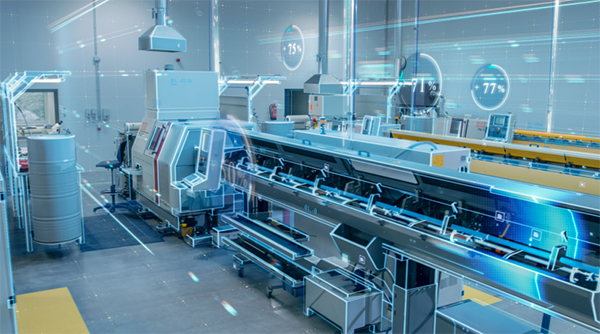
• Smart Sensors and IoT Integration
Smart sensors and Internet of Things (IoT) technologies embedded into CNC machines provide real-time control of the axes' movements. These sensors measure temperature, vibration, and position to ensure the machine does not operate outside a specified range. In case of any adverse effect on the machine's performance parameters, the system is designed to self-correct or warn the operators about the impending catastrophe.
• Artificial Intelligence and Machine Learning
The use of Artificial intelligence and machine learning in controlling CNC axes has become a big deal in recent years. This AI deep learning technology is capable of tracking the movements and performance of CNC machines over a long period and recognizing patterns that could not be identified by a human being. This allows the machine to optimize its own movements, adjusting speed and angles to improve efficiency and reduce tool wear.
Applications of Advanced CNC Axis Technologies
CNC axis advancements have multiple applications across various industries. Let’s discuss them!
1. Automotive Industry
The automotive industry leverages CNC technology in developing precision components. From the engine block to the elements of the gears, a CNC machine—in particular, the 4-axis and 5-axis—allows companies to create complex structure components with accuracy. Machine parts with multiple angles in a single setup reduce production time and enhance consistency, which is essential for mass production in automotive manufacturing.
2. Aerospace
In the aviation industry, accuracy and safety cannot be compromised. CNC machines, especially 5- and 6-axis systems, are important for manufacturing aerospace parts like turbine blades, engine parts, and airframes. The ability to machine intricate geometries and maintain tight tolerances is critical for ensuring the safety and performance of aerospace products.
3. Medical Devices
Medical device manufacturing has some of the most challenging machining processes when developing parts for products such as prosthetics, implants, and surgical tools. The use of 5-axis and 6-axis CNC machines is a normal practice when producing these devices, especially considering that they have to make complex geometries with the accurate precision required in the medical industry.
4. Custom Manufacturing and Prototyping
In advanced industries like custom jewelry manufacturing, sculpturing, and prototyping, advanced CNC axis systems create highly detailed and complicated designs. Such applications typically employ 4-axis and 5-axis CNC machines to carve intricate patterns, engravings, and forms that are impossible to achieve with traditional methods.
Multi-axis CNC equipment assists manufacturers in experimenting with complex geometries and materials without losing precision and quality. For instance, prototypes for automotive engine components or turbine blades can be prototyped accurately, thus making the functional test results meaningful. This feature shortens the time to market, which is one more reason why companies are willing to invest in advanced CNC axis technologies for prototyping.
Challenges and Solutions in CNC Axis Integration
Robust CNC axis systems have various benefits but come with challenges that must be addressed. Let’s discuss the challenges with solutions:
• Precision vs. Speed Trade-Off
One of the most challenging aspects of CNC Machining is the need for precision and speed simultaneously. High-precision machining requires slower axis movements to maintain tight tolerances, especially when working with intricate parts or hard-to-machine materials. However, some industries, like automotive and electronics manufacturing, require high-speed machining to achieve set production goals.
• Software Compatibility
Multi-axis CNC machines require sophisticated software to accurately manage tool paths, axis movements, and material engagement. However, integrating this software with machines from different manufacturers or legacy systems can be challenging.
Many CNC machine manufacturers leverage open-source platforms or proprietary software solutions that provide excellent compatibility across different machines.
• Maintenance and Reliability
The complexity of a CNC machine tends to rise with the number of available axes, which can lead to higher maintenance requirements. Multi-axis CNC machines have a more complex structure; more moving parts translate to more failure rates. If not properly managed, this enhances the risk of downtime and high maintenance.
A critical solution to this challenge is the utilization of predictive maintenance technologies. Sensors implanted in the CNC axis systems can register the machine's operational state in real time, identifying wear or mechanical stress even before it leads to a breakdown. This means that manufacturers can do maintenance work on schedule and avoid expensive delays caused by inefficiencies.
Future Trends in CNC Axis Technologies
Several trends are shaping the future of CNC axis systems. These trends are expected to push the boundaries of what CNC machining can achieve, offering greater precision, flexibility, and integration with other manufacturing technologies.
1. Hybrid Manufacturing
One of the most thrilling developments within the field of CNC machining technology is the innovative manufacturing process known as hybrid manufacturing. This technology combines conventional CNC machining processes with additive manufacturing (3D printing) processes. Through the hybrid model, manufacturers can employ CNC axis systems to machine high-density parts while using additive processes to form features or create internal configurations that cannot be machined directly.
This hybrid model of a system utilizing CNC axes can be used not only for the convenient and fast removal of the material but also for redirecting the additive heads to operate continuously. This trend is exceptionally good for the manufacturers in the aerospace sector, where there is an excellent need for intricate, light structures.
2. Robotics Integration
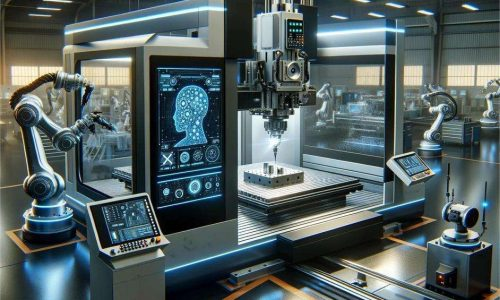
The integration of CNC axis systems and robotics is yet another promising technology trend. In this configuration, CNC Machines and robotic arms are used simultaneously. The CNC axes are responsible for the machining process, while the robotic arms perform operations such as loading and unloading the workpiece, polishing, or assembly. This increases the employment of automation to a higher level of flexibility and productivity in the manufactured components.
Integration of robotics is often seen as an advantage, mainly in smart factories, where multiple machines and robotic systems work together seamlessly. Therein, a CNC Machine with a multi-axis can engage in intricate machinations while the robotic systems manage logistics—all ensuring high efficiency.
3. Self-Learning CNC Machines
The future of CNC machining also heads toward self-learning systems, where artificial intelligence (AI) and machine learning (ML) are used to improve machine performance. AI algorithms analyze data from past machining operations to optimize tool paths, axis movements, and cutting speeds in these systems. This enables the machine to learn from previous jobs and improve efficiency over time.
For example, suppose a CNC machine identifies that a particular material type causes increased tool wear. In that case, the AI system can adjust the axis movements to minimize tool wear in future operations. Similarly, if the machine detects that specific machining parameters lead to better surface finishes, it can automatically apply those settings to similar jobs.
4. Sustainable Manufacturing Practices
As industries strive to reduce their environmental impact, developing sustainable CNC machining practices is becoming a significant focus. CNC axis systems are designed to be more energy-efficient, reducing power consumption without sacrificing performance. This is particularly important in sectors like aerospace and automotive, where energy consumption during production processes can be substantial.
Moreover, sustainable CNC machining also involves reducing material waste. Multi-axis CNC systems have already contributed to this effort by allowing for more precise material removal and reducing excess material and scrap. Integrating recyclable materials and green manufacturing techniques, such as reusing chips and coolant, is becoming more common.
Conclusion
Modern CNC axis technologies are changing the manufacturing process in many industries by offering machinists the ability to work with high precision, versatility, and speed. The evolution of the CNC axis system enables manufacturers to respond to upward trends in manufacturing processes, from simple, operated 2-axis systems to 6-axis systems, and above all, they are capable of making detailed and complicated parts.
Innovations in control systems, such as incorporating digital twins, complex AI optimizations, and IoT integration, are further enhancing the capabilities of CNC machines that were previously impossible. As these technologies continue to develop, innovations in the trends above will increase the scope of CNC axis system operations in the near future with aerospace, automotive, and healthcare.
Trends such as hybrid manufacturing, robotics integration, self-learning machines, and sustainable methods will determine how CNC machining will shape the future. With the widespread adoption of those trends, CNC axis systems will have an important place in smart, automated, and sustainable factories, sustaining manufacturing innovations and efficiency levels for many years to come.
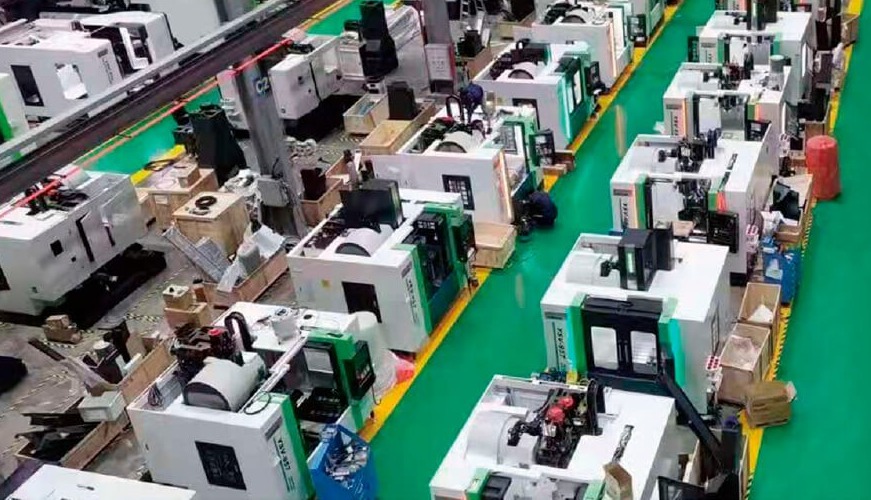
Did you know the CNC industry market is expected to reach 84.5 billion USD by 2028, thanks to the CNC machine shops⸺major reason behind this impressive figure? CNC machine shops are essential in modern manufacturing, delivering unmatched precision in machining processes.
Utilizing advanced computer numerical control technology, these shops produce intricate parts and components with high accuracy, minimizing errors and waste.
However, selecting the right CNC machine shop is crucial. At Royal Yangsen, we specialize in advanced CNC machining solutions, ensuring precision and quality across diverse sectors.
Stay with us to explore CNC machine shops and their role in innovation and development.
Role Of CNC Machine Shops
CNC machine shops bring designs to life by producing complex parts for the aerospace, automotive, and medical industries. By blending human expertise with cutting-edge technology, CNC machining achieves high levels of accuracy, meeting the economic demands of precision manufacturing.
CNC machine shops have become indispensable in today’s developing world, where even minor deviations can lead to significant costs. The core of these processes lies inCNC machine, which offer unmatched precision and versatility. These tools are the driving force behind the efficiency and consistency that modern manufacturing demands.
Why CNC Machine Shops Are Essential
No one can underestimate the importance of CNC machine shops. These shops are high technology and skilled laborers using advanced technology to manufacture parts demanded in excellent quality.
CNC machining offers precision, accuracy, and the ability to repeat the same process, which benefits industries that require standards to be set and met more tightly. CNC machine shops experience a kind of industrial innovation that cuts the time used in production and prevents errors as much as possible.
Advanced engineering designs allow complicated sections of the part to be generated with precision and minimum possibility of flaws caused by human interpolation. From developing a product prototype to making the final product for the rapidly growing market, CNC machine shops make the realization of manufacturing dreams possible.
Services Offered By CNC Manufacturing Industries
A CNC manufacturing industry provides a diverse range of services to cater to different industries’ unique requirements:
Milling: A CNC shop uses rotating cutting tools to cut, machine, and shape materials such as metals, plastics, and wood. This process is essential for manufacturing complex components in the aerospace and automotive industries.
Turning: CNC turning is a process of cutting a rotating workpiece with a cutting tool applied through a lathe; it is suitable when making cylindrical parts such as shafts, screws, bolts, and rods.
Drilling:CNC drilling also helps to avoid misplacement of holes and gives uniformity in terms of positioning of holes and that the product meets the required standard.
Cutting: Water jets and laser cutting technologies enhance product cutting because they control cutting-edge pressure, so material strength is not compromised.
These services are tailored to meet industry needs, allowing organizations to produce specialized components or obtain large volumes through standardized outputs.
CNC Machine Shops and Manufacturing Efficiency
Flexibility is an important parameter in today’s production, and CNC machine shops are built to maximize this.
Unlike manual methods involving hands, these CNC machines operate 24/7 to produce full-fledged parts at incredible speed. This operation also increases production cycles, contributing to shorter delivery periods and costs.
CNC machine shops can take credit for decreasing rather sharply the time taken to setup. With the software type of system, once a design has been encoded, the computer can reproduce as many without readjustment.
This efficiency minimizes production delays, contributing to faster time-to-market.
Traditional methods may require trial-and-error iterations, but CNC machines cut precisely where needed, reducing resource consumption and enhancing sustainability.
Additionally, CNC machining minimizes material waste. Traditional methods may require trial-and-error iterations, but CNC machines cut precisely where needed, reducing resource consumption and enhancing sustainability.
Royal Yangsen supports various sectors, including aerospace, automotive, and medical, focusing on precision and efficiency, ensuring top-quality results.
Why Cnc Machining Is A Cost-Effective Solution For Modern Manufacturing
CNC machining is a cost-effective process because it enhances the productivity of the machines used in the workplace.
CNC machine shops provide excellent opportunities for enterprises looking to outsource their manufacturing components at a cheaper rate with quality work. Automation implies minimal human input, cutting down manufacturing costs.
Using raw materials in CNC machines is also efficient and another way of saving in the long run since there is little wastage.
Secondly, fewer production time cycles result in a shorter time between product conception and its availability to consumers.
CNC Machine Shops: Leading Changes in the Current Economies
CNC machine shops are foundational to several key industries, supporting innovation and precision:
Aerospace: Components used for aerospace applications are required to conform to great safety and efficiency. CNC machining produces parts and components, such as the turbine blades and engine parts, with high precision.
Automotive: Automakers turn to computer numerical control machine shops to produce automakers through important auto parts, including gears, pistons, and brake systems.
These components should be able to endure a variety of harsh environments, and the methods expounded here guarantee that there is massive production without having to sacrifice quality.
Medical: More often than not, medicine is all about perfect accuracy. Surgical instruments, implants, and prosthetics are manufactured in CNC machine shops and must be precise and constant as the equipment that saves lives depends on them.
Precision: The Heart of CNC Machining
Accuracy is inherent in operation with Computer Numerical Control Technology. Especially in such fields as aerospace or healthcare, even small defects in a part can cause catastrophic effects.
CNC machines run with high precision and follow set programs to the curve of micrometers. Such accuracy of the work makes CNC machining essential when it comes to producing the sections required to perform optimally in rigorous environments.
CNC Machine Shop and Selection Process
Both seasoned industries and start-ups require a suitable CNC machine shop to take products to market securely. A reputable shop does not only provide advanced technology but also with experienced operators and yields quality.
Here’s what to consider when choosing a CNC shop:
Experience: Any shop that wants to be a one-stop business will need to understand the various issues that might surround various industries.
Technology: Ultra-modern CNC machines provide precision and offer a guarantee for effectiveness.
Customer Support: Good shops are fully transparent and very supportive during the manufacturing process.
Selecting a reputed CNC machine shop guarantees that the final product conforms to the desired quality and lasts longer. When selecting CNC machines, comparing CNCmachine price points is essential based on your specific industry needs.
Customization and Flexibility in CNC Machine Shops
CNC machine shops excel in standard and custom manufacturing, making them invaluable to various industries. Whether you're developing a prototype or producing niche components, CNC machines offer the flexibility needed to meet diverse project requirements.
One of the benefits of CNC machining is its versatility in dealing with small-scale production runs. This is particularly important for companies requiring small quantities of custom components since specific designs are usually required.
In such instances, it becomes possible to achieve fast responses and alterations with the help of CNC technology, which can help companies optimize their products without the need for extensive, time-consuming corrections.
On the other hand, CNC machine shops are also involved in large-scale production requirements and can deliver consistent quality at high production levels. This blend of customization and standardization distinguishes CNC machining from conventional manufacturing processes.
In addition, CNC machines give high levels of accuracy in the work, meaning that even parts that are a product of customization will be accurate in dimensions. This is especially important to industries like aerospace and medical, where tolerances are the smallest and quality cannot be sacrificed.
However, the flexibility, accuracy, and effectiveness make CNC machine shops an ideal option for any company willing to introduce new products to the market while staying at a reasonable expense.
From creating one prototype to producing many of the same size and shape, any part of a manufacturing project demands flexibility – which is offered by CNC machining.
Emerging Trends in CNC Machining
The CNC machining industry is evolving with new technologies driving efficiency and innovation:
● 5-Axis Machining: Traditional CNC machines operate on three axes, but 5-axis machines add two more, allowing for greater precision and creating complex geometries.
● Automation: CNC shops are increasingly integrating automation to boost productivity. Robotic arms and material handling systems enable 24/7 operation with minimal human intervention.
● Sustainability: CNC machining is focusing on reducing material waste and energy consumption. Innovations in software and cutting techniques are improving overall sustainability.
Here is a quick comparison between traditional and advanced CNC machines.
Comparison of CNC Machine Features
Feature
Traditional CNC Machines
Modern CNC Machines
Number of Axes
3
Five or more
Software Integration
Limited
Advanced CAD/CAM
Automation
Minimal
High (Robotics/IOT)
Energy Efficiency
Standard
High
Looking To The Future Of Cnc Machine Shops
CNC machine shops are well-positioned to define the future of manufacturing. Using Artificial Intelligence in optimization, smart production, and advanced automation will revolutionize manufacturing capability.
Machining will keep getting enhanced by AI algorithms while, on its part, machine learning will forecast when a machine will require repair, thus minimizing the time a machine is out of use.
With the growing influence of IoT as a common platform between industries, CNC machine shops will be vital in shaping a more efficient interconnected manufacturing network.
Advanced CNC Machining And CNC Yangsen: A Reliable Collaboration
CNC Yangsenis a trustworthy CNC machine shop where we offer the best tools and solutions for your business requirements.
We offer modern technologies and superb quality CNC manufacturing machines.
In refining these processes and increasing sales leads, we allow businesses, irrespective of the field, including retail, real estate, and insurance, to go through their core business as we take care of their communication lines.
Our solutions eliminate cost issues and other operational inefficiencies, which helps us create a more satisfied customer base to meet changing demands in the current market.
Here are five compelling reasons to choose CNC Yangsen for your innovative CNC machine needs:
1. Cutting-Edge Technology
CNC Yangsen utilizes the latest advancements in CNC technology, ensuring precision and efficiency in every machine. Their innovative designs enhance productivity and reduce operational costs.
2. Custom Solutions
The company offers tailored solutions to meet diverse industry requirements. Whether you need specific functionalities or unique configurations,
3. Expertise and Experience
CNC Yangsen has several years of operations in the CNC industry and has managed to provide quality machines. It will elicit our talented workforce who can offer quality advice and assistance.
4. Comprehensive Support
CNC Yangsen also ensures that its after-sales customer support services are efficient, including training, maintenance, and troubleshooting to ensure smooth operations.
5. Competitive Pricing
We supply good quality machines at reasonable prices, providing good value for the cash invested. These qualities make CNC Yangsen ideal for helping several businesses since it is both reputed and cheap, depending on the deal cuts.
By choosing CNC Yangsen, you can leverage their innovative solutions to enhance your manufacturing capabilities.
The Bottom Line
CNC machine shops are vital in today’s manufacturing landscape, driving innovation and efficiency.
As the industry evolves, these facilities not only produce components but also shape the future of production through advanced technologies like automation, AI, and robotics.
Choosing the right CNC machine shop is crucial for businesses seeking exceptional service, competitive pricing, and faster turnaround times.
As for CNC Yangsen, we have inherited and continue to enhance this quality and reliability concept, which locates us in the leading CNC machining field. The core values of innovation and client satisfaction ensure we accurately shape machine parts with optimum quality.
In the fast-paced modern life, everyone desires greater convenience and efficiency in their daily routines. However, mundane tasks like washing shoes by hand can often be a headache. Fortunately, the emergence of commercial shoe washing machines has solved these issues.
As the name suggests, a commercial shoe washing machine is a specialized device designed to clean shoes. Compared to traditional handwashing methods, it offers superior efficiency and cleaning results. Whether it's sneakers, leather shoes, or cloth shoes, a commercial shoe washing machine can tackle them all, leaving them refreshed and renewed.
Firstly, the cleaning effect of a commercial shoe washing machine is truly impressive. It utilizes advanced cleaning technology to penetrate deep into the shoes, removing stains, sweat, and other impurities thoroughly. Additionally, the machine offers various cleaning modes that can be tailored to the material and degree of staining of the shoes, ensuring optimal cleaning results every time.
Secondly, the commercial shoe washing machine boasts impressive work efficiency. Compared to handwashing, it can clean multiple pairs of shoes simultaneously, significantly saving time. For businesses, this means faster processing of large volumes of shoe cleaning demands, enhancing operational efficiency.
Moreover, the commercial shoe washing machine is user-friendly and safe. It features an intelligent operating system that simplifies the entire cleaning process with just a few simple steps. Simultaneously, the machine is equipped with multiple safety protection measures, ensuring no safety hazards arise during use.
The emergence of commercial shoe washing machines has not only transformed our lifestyles but also driven innovative development in the shoe cleaning industry. It has made shoe cleaning simpler, faster, and has enhanced the quality of our lives.
In this era of intelligence and automation, the commercial shoe washing machine undoubtedly serves as a great boon in our lives. Let us embrace this new era of intelligent cleaning and enjoy a more convenient and efficient lifestyle!
Rice undergoes a series of processes during processing, including milling, polishing, and grading, and the rice color sorter plays a crucial role in this process.
Impurity Detection: The rice color sorter can effectively identify and remove impurities from the rice, such as small stones, broken rice, and discolored grains, which is essential for improving rice quality.
Color Sorting: Based on the color of the rice, the color sorter can separate normal rice from discolored or moldy grains, ensuring consistent color in the final product.
Grading: The rice color sorter can perform precise grading based on different colors and appearance characteristics, meeting the diverse needs of various markets.
Loss Reduction: By providing precise sorting, the color sorter can minimize losses caused by impurities or deteriorated rice, thereby enhancing production efficiency.
Improving Product Image: Using a color sorter can enhance the visual quality of the rice, strengthening the brand image and increasing market competitiveness, making the product more appealing.
Compliance with Standards: Many markets have strict quality requirements for rice, and using a color sorter helps produce products that meet these standards, increasing market access opportunities.