ABS (Acrylonitrile Butadiene Styrene) hatch covers have become increasingly popular in the marine world due to their durability, lightweight design, and resistance to harsh environmental conditions. Whether you're a boat owner looking for reliable access hatches or ventilation solutions, ABS hatch covers offer numerous benefits that make them an excellent choice.
ABS hatch covers are significantly lighter than metal counterparts like stainless steel or aluminum, which reduces the overall weight on the boat. Despite being lightweight, ABS offers exceptional strength and impact resistance, ensuring the hatch can handle rough seas or heavy foot traffic.
Corrosion Resistance:
Unlike metal hatches, ABS hatch covers are immune to rust and corrosion, making them ideal for use in saltwater environments. This resistance to corrosion extends the life of the hatch and reduces the need for regular maintenance.
UV Resistance:
ABS materials are highly resistant to UV rays, preventing the hatch from cracking, fading, or becoming brittle due to prolonged exposure to the sun. This makes ABS hatch covers particularly well-suited for boats that spend a lot of time in direct sunlight.
Cost-Effective:
ABS hatch covers are generally more affordable than metal options while offering similar performance benefits. This cost-effectiveness makes them a great choice for boat owners who want quality without breaking the bank.
Easy Installation and Maintenance:
Due to their lightweight nature, ABS hatches are easier to install and handle compared to heavier materials. Additionally, their low-maintenance design means fewer concerns about corrosion or constant repairs.
Versatile Designs:
ABS hatch covers come in a wide range of sizes, shapes, and colors to suit different boat styles and needs. Whether you need an access hatch for storage compartments or ventilation hatches for cabins, ABS can meet various design requirements.
Conclusion
newmao different kind of hatches covers are a fantastic option for boat owners seeking a balance between durability, affordability, and low maintenance. Their lightweight, corrosion-resistant, and UV-resistant properties make them a reliable choice for boats in various marine environments. you're investing in long-lasting, cost-effective hatch solutions that will stand up to the rigors of life at sea.
If you're in the market for amacerator pump for your camper or RV, you might find yourself unsure of where to start. Whether you're overhauling your RV's waste system or simply replacing an existing macerating toilet pump, understanding the importance of macerator pumps can make the process easier. These essential components play a key role in efficiently managing RV waste, making disposal cleaner and more convenient.
Finding the right macerating toilet for your RV can be a daunting task, but a basic understanding of how these pumps work and what to look for can help simplify your decision.
How Does an RV Macerator Pump Work?
Unlike a standard flush toilet, an RV macerator pump processes waste in a unique way. Similar to a kitchen garbage disposal, the pump uses stainless steel blades to grind waste from each flush into a fine slurry. This slurry is then pumped through PVC piping, away from the holding tank. The blades activate automatically with each flush, ensuring seamless operation every time.
Ideal for small spaces and efficient waste disposal, macerator toilets can significantly improve your RV's sanitation system, offering a streamlined solution compared to conventional RV toilets.
Applications of Macerating Pumps
Macerator pumps aren't just popular in RVs—they're also widely used in homes and commercial buildings. For campers, these pumps simplify the process of dumping and disposing of waste tank contents, making them a compact and powerful solution for on-the-go sanitation.
By reducing RV black waste into a fine slurry, macerators can move waste over longer distances and into various disposal locations with fewer odors and constraints. Thanks to their self-priming capabilities, these pumps can easily suction and clean tanks using vacuum pressure.
Moreover, macerator pumps allow you to empty your RV’s tank into your home’s septic system or at a dump station through a standard garden hose. This feature facilitates easy waste disposal while minimizing septic tank issues. Portable macerators and quick-release RV toilet pumps are also available, further simplifying the process by reducing the need for hoses.
What to Look for in a Macerator Pump
When selecting a macerator pump and toilet for your RV, it’s essential not to compromise on quality, performance, or functionality. Here are the key characteristics to consider:
Durability: Your RV is built for adventure, and your macerator pump needs to withstand the rigors of the road. Look for a pump designed specifically for RV installation, backed by a solid warranty.
Easy Installation: Avoid costly installations by choosing a macerator pump that’s straightforward to install, even for those new to plumbing.
Size: Ensure the macerator pump is the right size for your RV. If you're unsure, feel free to reach out to us for advice.
When it comes to the intricate systems that power recreational vehicles (RVs) and yachts, the role of diaphragm pumps cannot be overstated. These pumps, known for their versatility and reliability, serve as unsung heroes behind the scenes, ensuring smooth operations in various applications.
Understanding Diaphragm Pumps
Diaphragm pumps, characterized by their unique pumping mechanism, utilize a flexible diaphragm to create a pumping action. This mechanism allows for the efficient transfer of fluids without the risk of cross-contamination, making them ideal for a wide range of tasks in RVs and yachts.
Applications in RVs
In the realm of RVs, diaphragm pumps find their purpose in numerous systems. From water supply for showers, sinks, and toilets to the pressurization of water systems for cleaning purposes, these pumps excel in delivering consistent water flow while maintaining a compact and low-noise profile, crucial for the comfort of travelers on the road.
Moreover, diaphragm pumps play a pivotal role in managing wastewater. Their ability to handle solids and sludge makes them indispensable in sewage and greywater disposal systems, ensuring efficient and hygienic waste management on mobile homes.
Utilization in Yachts
Similar to their RV counterparts, yachts heavily rely on diaphragm pumps for multiple applications. The resilience of these pumps in harsh marine environments makes them an ideal choice for transferring water between tanks, providing reliable pressurized water for on-board facilities, and managing bilge water effectively.
The self-priming and dry-run capabilities of diaphragm pumps further enhance their suitability for marine applications. This ensures continued operation even in challenging conditions, a crucial factor in the unpredictable seascape.
Conclusion
The adaptable nature of diaphragm pumps makes them an invaluable asset in the world of RVs and yachts. Their reliability, versatility, and ability to handle diverse fluid types and conditions make them a cornerstone in ensuring seamless operations and comfort for enthusiasts and adventurers navigating the open road or the vast seas.
A solar panel production line is a manufacturing system specifically designed for the assembly and production of solar panels, which are devices that convert sunlight into electricity. It involves various processes and components to ensure the efficient and accurate manufacturing of solar panels.
Let's understand what a panel production line entails. It is a series of interconnected machines and equipment that work together to produce solar panels on a large scale. The production line typically consists of several key components:
Frame Cutting and Fabrication(Solar Cell Laser Cutting Machine): This step involves cutting and shaping the aluminum frames that provide structural support to the solar panels. It includes processes like cutting, milling, and drilling.
Glass Cleaning and Coating: The glass used in solar panels goes through a rigorous cleaning process to remove any impurities. Additionally, an anti-reflective coating may be applied to enhance the panel's light absorption.
Cell Stringing(Solar Cell Tabber Stringer): Solar cells, which are typically made of silicon, are interconnected to form a solar panel. This process involves precise placement and stringing of the cells using automated machinery.
Encapsulation(Solar Panel Laminator): The solar cells are encapsulated within a layer of protective material, such as ethylene-vinyl acetate (EVA), to ensure their durability and performance. This process often involves the use of lamination machines to create a secure bond.
Testing and Quality Control: After the panels are assembled, they undergo rigorous testing procedures to ensure their performance and efficiency meet industry standards. This includes electrical testing machine, visual inspection, and performance evaluation.
The components of a solar production line work collectively to streamline the manufacturing process and achieve high-quality solar panels. Each step is carefully executed to ensure accuracy, reliability, and efficiency.
The solar panel production line is a sophisticated assembly system that integrates various components and processes to produce solar panels at scale. From frame cutting and glass coating to cell stringing and encapsulation, each step plays a crucial role in creating reliable and efficient solar panels. Suposolar is a professional solar panel production line provider, get more information from us quickly.
In the rapidly evolving solar energy sector, Supo stands out with its innovative Turnkey Solar Panel Production Line, designed for manufacturers looking to enhance efficiency and output. Our comprehensive system simplifies the entire solar panel manufacturing process, from raw material handling to final assembly.
At the heart of our production line are advanced PV Module Machines that ensure high precision and performance. These machines optimize the workflow, minimizing waste and maximizing output. By integrating automation and cutting-edge technology, Suposolar enables manufacturers to scale operations quickly and adapt to dynamic market demands.
With our turnkey solution, everything—from equipment installation to staff training—is expertly managed by Supo, allowing businesses to focus on their core competencies. This streamlined approach not only reduces lead times but also ensures the production of high-quality solar panels that meet international standards.
As the global push for renewable energy continues, investing in Supo’s Solar Panel Production Line is essential for enhancing competitiveness and sustainability in the market. Embrace our technology and position your business for success in the solar industry.
Two important elements defining the quality of machining are accuracy and precision. While accuracy gauges how closely a result is to the desired aim, precision describes how regularly a machine may repeat the same result. These two ideas are essential in manufacturing sectors where even little mistakes can cause expensive issues.
This article will discuss the value of accuracy and precision in machining and how modern technology, such as CNC machines, improves both.
What is the Difference Between Precision and Accuracy?
Though they define various aspects of measurement, accuracy, and precision are basic ideas in machining.
· Precision: Precision in machinery is the ability of a machine to perform a certain operation repeatedly. Even if the result is inaccurate, a CNC machine is said to be precise when it consistently generates the same result. Precision is about lowering variation in ongoing work. A CNC machine is accurate but not precise, for instance, if it routinely cuts metal 0.2 millimeters off target.
· Accuracy: This word describes the degree of proximity of a process's outcomes to the intended measurement. A machine is accurate if its cut exactly fits the needed specification. Accuracy by itself, though, is insufficient. Even an accurate machine might not run consistently without precision.
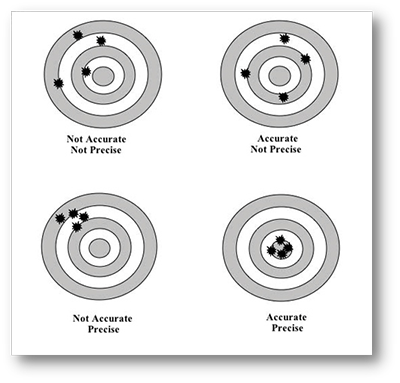
Consider a dartboard to help you understand this. Precision is when all the darts land in the same location, notwithstanding their distance from the bullseye. Though it's just one throw, accuracy is when the dart lands on the bullseye.
Excellent accuracy and precision combined with a CNC machine will help to lower material waste, increase efficiency, and satisfy the most exacting standards. That is vital in aerospace, automotive, and electronics sectors where every component must satisfy exact criteria. It Equipped with both features, a machine guarantees consistent, high-performance output.
Why Does Machining Precision Matter?
Machining requires precision for various reasons. Repeatability is among the main advantages of accuracy. In sectors like automotive or aerospace, each item must be the same even though parts are manufactured in great numbers. CNC machines guarantee that independent of production volume, every single component satisfies the same criteria thanks to their great precision.
These are the main causes of the great importance of accuracy:
· Consistency in Mass Production: A small variation can cause quality control problems throughout thousands of parts. For instance, a part may not operate as intended when assembled if it is routinely cut somewhat too small. Precision guarantees that every component is produced according to the same criteria, solving this issue.
· Reduced Material Waste: Precision machines effectively use materials, reducing waste. Any machining process flaw, no matter how little, can cause material to be modified or discarded. Along with costing more, this wastes priceless resources.
· Higher Quality Products: High precision guarantees that parts are created exactly as needed in sectors where safety and dependability rule, including medical equipment or aerospace. A product failure arising from even small differences may have disastrous results.
· Less Need for Adjustments: Precision lessens the demand for rework or corrections. Precisely produced pieces fit together, saving the need for further adjustments following machining.
In What Ways Could Accuracy Affect Machined Part Quality?
Precision guarantees repeatability; accuracy guarantees that items satisfy the intended standards. Accuracy is crucial for manufacturing important components—such as those found in medical equipment, electronics, or heavy machinery.
For instance, every flaw in a component you are machining for a high-performance engine can cause mechanical breakdown. The engine components must mesh precisely. A small difference can lead to friction, heat, and wear, degrading engine performance and lifetime. Accurate machining guarantees that every component fits together as it should.
Key Effects of Machining Accuracy:
· Meeting Tight Tolerances: Certain sectors demand items produced under very limited tolerances. Reaching these criteria depends on accurate machines. No matter how exact, inaccurate equipment can fail to reach these important tolerances and produce defective items.
· Assembly and Functionality: Accurate machining of components will result in proper fit and desired functionality. Accuracy guarantees that the product will function as intended, whether you are building a basic assembly line or a sophisticated aeronautical component.
· Improving Reliability: In sectors including medical equipment, even the smallest mistake can make all the difference between life and death. Reliable and precise operation of parts is guaranteed by accurate machining.
Accuracy vs. Precision Examples
Evaluating the performance of manufacturing activities depends much on accuracy and precision, which are independent factors. While precision indicates the machine's capacity to perform the same operation regularly, accuracy in CNC machining gauges a part's relative proximity to its intended dimensions. In order to keep specified dimensions, most CNC machines depend on computer software. Still, the outcomes may differ:
· Precise and Accurate: A CNC machine constantly generates parts with minimum errors that match the design criteria. One gets accuracy as well as precision.
· Accurate but Not Precise: Though the machine generates pieces almost within the specified measurements, the outcomes vary. While some components stray, others satisfy the criteria.
· Precise but Not Accurate: Although the machine always generates parts with the same measurements, those measurements deviate from the desired specifications. Though wrong, the parts are similar.
· Neither Precise Nor Accurate: The machine generates inconsistent pieces; none satisfy the needed standards.
Evaluating the performance of manufacturing activities depends much on accuracy and precision, which are independent factors. While precision indicates the machine's capacity to perform the same operation regularly, accuracy in CNC machining gauges a part's relative proximity to its intended dimensions. In order to keep specified dimensions, most CNC machines depend on computer software. Still, the outcomes may differ:
· Precise and Accurate: A CNC machine constantly generates parts with minimum errors that match the design criteria. One gets accuracy as well as precision.
· Accurate but Not Precise: Though the machine generates pieces almost within the specified measurements, the outcomes vary. While some components stray, others satisfy the criteria.
· Precise but Not Accurate: Although the machine always generates parts with the same measurements, those measurements deviate from the desired specifications. Though wrong, the parts are similar.
· Neither Precise Nor Accurate: The machine generates inconsistent pieces; none satisfy the needed standards.
Differentiating between accuracy and precision and independently measuring them will help to guarantee a high-quality machining operation. Examples illustrating how these two factors influence part machining are below:
1. Precision and Accuracy in Gear Manufacturing: Precision and accuracy define a CNC machine that generates gears with the right size and form for seamless operation. The machine is accurate but not exact; if the gears vary in size, they still fit appropriately.
2. Medical Device Production Accuracy: Medical equipment has high criteria. Though accuracy may be insufficient if some pieces vary, machine-produced parts with exact implant specifications could be accurate.
Knowing these differences optimizes the machining process, guaranteeing accuracy and precision for dependable, high-performance products.
Could A Machine Be Precise But Not Accurate?
A machine can be precise but not accurate at the same time indeed. In machining, this is a vital difference.
Suppose you are making cylindrical pieces on a lathe. The machine is exact since it generates the same output every time if it constantly generates pieces that are 0.5 millimeters bigger than the target diameter. The parts are not the right size; hence, they are not accurate either. That emphasizes how to separate traits—accuracy and precision—that must be optimized and call for separate optimization.
A machine can produce consistent components even if it is not accurate if it is exact; those parts will not satisfy the required criteria nevertheless. That can be a challenge in sectors like aerospace or automotive, where the pieces must precisely fit one another.
Key Differences:
· Precision: Always leads to the same outcome, even if it's wrong.
· Accuracy: generates the right outcome despite an erratic process.
Should a machine prove accurate but not exact, calibration could be necessary to fix the inaccuracy. Recalibrating the equipment can change the process to become exact and accurate.
Why Would A Machine Be Precise But Not Accurate?
Wear and tear, poor calibration, or incorrect setup can cause machines to grow imprecise or inaccurate. Even the best devices could need recalibration over time to keep accuracy and precision. Therefore, regular maintenance and calibration are essential to guarantee that devices satisfy the required criteria.
Although CNC Yangsen's machines are made to keep accuracy and precision throughout time, regular calibration helps to guarantee long-term performance.
How Do Machining Tolerances Affect Precision and Accuracy?
In machining, tolerances are deviations allowed from a given dimension. Tolerances allow a margin for slight deviations since no machine can generate precisely to specification every time.
Most machining processes find that the cost of output increases with decreasing tolerance. Tolerances are intimately connected to both accuracy and precision. Precise and accurate machines can generate parts regularly falling inside the necessary tolerance range.
Types of Tolerances:
· Tight Tolerances: These are applied even when the tiniest departure from the designated measurement could lead to issues. For an aviation engine, for instance, parts might have to be machined within a tolerance of 0.01 millimeters since even the tiniest change might compromise performance.
· Loose Tolerances: Looser tolerances can be employed in some areas where accuracy is unnecessary. For non-critical parts that won't be under stress or wear, for instance, looser tolerances allow for small variations from the intended size or form.
Machines such as the very precise CNC verticle machine centers offered by CNC Yangsen are perfect for exact tolerances. They guarantee that every part satisfies the necessary criteria by operating within quite small margins of error.
How Can You Make Machining Both Precise And Accurate?
High-quality parts require the proper mix of accuracy and precision. A precise but not accurate machine will regularly generate parts that are off. On the other hand, if a machine is accurate but not exact, it will only seldom generate parts that satisfy the criteria.
· Invest in High-Quality Machinery: Not every machine is built equal. While certain devices can offer accuracy and precision, others may be made for only one. CNC Yangsen's high-end machines provide accuracy and precision, guaranteeing constant outcomes.
· Maintain Equipment: Regular maintenance is even required of the most sophisticated machinery. Keeping machines both accurate and exact depends on proper maintenance, part replacement, and recalibration.
· Calibration: Frequent calibration guarantees machines' correctness throughout. Even the greatest machines can wander from their intended specs without calibration, producing inaccurate products.
Complex Machining Requires Precision And Accuracy, Why?
Ensuring that items satisfy the required criteria in complicated machining projects requires accuracy and precision. Complex jobs often call for a machine capable of preserving accuracy and precision throughout the process, including several processes, tight tolerances, and using several materials.
For instance, think of the manufacturing of an aircraft multi-part assembly. The whole assembly may suffer if one component is inaccurately or precisely lacking. In these situations, even little variations from the planned design can cause performance problems, safety hazards, or failure of the ultimate result.
For complex machining jobs, machines such as the 5-axis CNC machining centers from CNC Yangsen are perfect since they provide both accuracy and precision even when working with challenging materials or intricate geometries.
Complex Machining Applications Of Accuracy And Precision:
· Aerospace Components: High-precision machining guarantees that, under the worst conditions, all parts fit together exactly.
· Medical Devices: Errors in medical equipment can endanger people. Precision machining ensures the intended functionality of devices.
High-precision tools for these jobs would be CNC machining centers from CNC Yangsen. Designed to satisfy the strict criteria of various sectors, they provide accuracy and precision for the most important jobs.
How Do Precision and Accuracy Impact Efficiency and Cost?
Machining processes' cost and efficiency directly rely on accuracy and precision. Precise and accurate machines lower rework, reduce waste and boost production speed. Over time, this translates into notable cost reductions.
Accurate and exact machining of parts reduces the necessity of remakes or corrections. Because every part is created to exact standards, accurate machines help cut the time spent on quality control inspections.
Benefits of High-Precision and Accurate Machines:
· Reduced Waste: Consistent machine performance reduces waste of materials.
· Lower Rework Costs: Less time and money spent fixing mistakes equals fewer mistakes overall.
· Increased Production Speed: Faster and more dependably produced parts by precision machines raise general efficiency.
By providing unsurpassed precision and accuracy, lowering waste, and enhancing production efficiency, machines such as high-precision CNC turning centres help firms save time and money.
How to Improve Machining Precision and Accuracy?
Minimizing waste and manufacturing high-quality products depend on improved machining precision and accuracy. These are several strategies to get better:
· Regular Calibration: Machines are periodically calibrated to guarantee their operation within the intended tolerances.
· Use High-Quality Tools: Purchasing sharp, long-lasting cutting tools guarantees constant results and improved accuracy.
· Maintain Optimal Speeds: Correct feed rates and spindle speeds running machines guarantee accurate and precise components.
· Perform Routine Maintenance: Frequent maintenance and cleaning of machines helps to prevent mechanical problems generating mistakes.
· Stable Environment: Temperature swings and vibrations can affect accuracy; a controlled atmosphere reduces these influences.
Machining accuracy and precision will be much improved by applying these techniques.
Conclusion:
Producing high-quality products that meet industrial machining standards depends on accuracy and precision. Accuracy ensures that each component is produced to the appropriate standard, while precision ensures repeatability. For industries that require exacting standards, advanced CNC machines offer an ideal combination of both, making them absolutely indispensable.
Manufacturers can increase general product quality, lower waste, and achieve higher efficiency by choosing the correct equipment. If you want to improve your machining techniques, consider selecting CNC machines that are accessible at CNC Yangsen.
Are you in need of a powerful and efficient machine for compacting soil or asphalt? Look no further than a tamping rammer compactor! These versatile machines are widely used in construction, landscaping, and road building projects. In this blog post, we’ll delve into everything you need to know about tamping rammer compactors, including their price range, machine types, and various uses.
Tamping Rammer Compactor Price: Factors to Consider
When it comes to investing in a tamping rammer compactor, price is an important consideration. The cost of these machines can vary depending on several factors, including:
Machine Type: Tamping rammer compactors are available in different types, such as gasoline and diesel-powered. Each type has its own price range, and your choice should be based on your specific requirements and budget.
Engine Power: The power of the engine directly affects the price of the tamping rammer compactor. Higher-powered machines are generally priced higher, but they offer superior performance and efficiency.
Brand: Well-known brands often come with a premium price tag due to their established reputations for quality and durability. However, it’s essential to consider the overall value and long-term benefits instead of solely focusing on the price.
Additional Features: Some tamping rammer compactors come with additional features, such as a low-vibration handle or a built-in fuel gauge. These added features can influence the price but might enhance the overall user experience.
Remember, choosing the right tamping rammer compactor should not solely be based on price alone. Consider your specific needs, budget, and quality aspects to make an informed decision.
Different Types of Tamping Rammer Machines
Tamping rammer machines are available in gas-powered (gasoline) and diesel-powered variants. Both types offer their own set of advantages and are suitable for different applications.
Gasoline Tamping Rammer Machines: Gas-powered tamping rammers are lightweight, portable, and easy to operate. They are commonly used for smaller projects and are ideal for compacting soil in narrow areas. These machines are known for their flexibility and are often more affordable compared to diesel-powered variants.
Diesel Tamping Rammer Machines: Diesel-powered tamping rammers are known for their durability and higher compaction force. They are typically used for larger projects and can handle heavy-duty applications with ease. These machines are more fuel-efficient, making them a cost-effective choice for long-term use.
Choosing between gasoline and diesel tamping rammer machines should be based on the scale of your project, the type of terrain you’re working on, and your budget considerations.
Wide Range of Uses
Tamping rammer compactors serve a wide range of purposes across various industries. Some common uses include:
Road Construction: Tamping rammers are extensively used to compact soil, sand, and asphalt during road construction projects. Their high impact force ensures a sturdy and durable foundation.
Landscaping: Tamping rammer compactors are essential for landscaping tasks, such as leveling ground, preparing lawns, or installing pavers. They provide efficient compaction and ensure a solid base for beautiful outdoor spaces.
Pipe and Cable Installation: Before laying pipes or cables, the ground needs to be properly compacted to prevent uneven settling. Tamping rammers help compact the soil, ensuring stability and reducing the risk of damage to underground utilities.
Foundation Preparation: Tamping rammer machines are used to compact soil before pouring concrete for building foundations. This ensures a stable base, preventing future structural issues.
Finding the Best Tamping Rammer Machine Supplier
To ensure you get a quality tamping rammer compactor, it’s crucial to find a reliable and trustworthy supplier. Consider the following factors when choosing a supplier:
Industry Reputation: Look for suppliers with a strong track record in the industry. Read customer reviews and testimonials to gauge their reputation and customer satisfaction level.
Variety of Options: A good supplier should offer a wide selection of tamping rammer compactor machines to suit different needs and budgets.
Warranty and Support: Check if the supplier provides a warranty for their products and offers excellent after-sales support. This ensures peace of mind and assistance if any issues arise.
Competitive Pricing: While price should not be the sole determining factor, a reputable supplier will offer competitive pricing without compromising on quality.
Research multiple suppliers, compare their offerings, and make an informed decision before purchasing a tamping rammer compactor.
In conclusion, a tamping rammer compactor is a valuable investment for your construction or landscaping projects. Consider various factors such as price, machine types, and supplier reputation to find the perfect tamping rammer compactor that meets your requirements. Happy compacting!
Have you ever wondered how those neatly packed meals are prepared for airline passengers? Behind the scenes, innovative machines are revolutionizing the production of airline food containers. One such breakthrough is the automated aluminum foil container making machine, which streamlines the manufacturing process and ensures precision and consistency.
Aluminum Foil Food Container Making Machine
The aluminum foil food container making machine is a state-of-the-art invention that has transformed the way airline meals are packaged. This automated machine takes flat rolls of aluminum foil and quickly converts them into the familiar meal boxes or lunch boxes we find on our trays during flights.
Operating with remarkable efficiency, the machine functions by feeding the aluminum foil into the system, where it is precisely cut and shaped. The automated process involves various stages, ensuring the containers are formed with accuracy and speed. From shaping the base to folding the edges, every step is meticulously executed, resulting in perfectly crafted food containers.
Aluminum Foil Meal Box, Lunch Box Making Machine
The aluminum foil meal box and lunch box making machine are designed to meet the demands of food packaging in various settings, including airlines. This versatile machine is capable of producing different types and sizes of containers to accommodate varying culinary requirements.
Equipped with advanced technology, this cutting-edge machine can produce meal boxes and lunch boxes with exceptional precision and speed. It handles every aspect of container production, such as forming the compartments, creating secure locks, and ensuring airtight seals. The finished products are reliable, durable, and specifically designed to preserve the quality of the food they contain.
Airline Food Packing Machine
To efficiently pack the prepared meals into the aluminum foil containers, airlines rely on the innovative airline food packing machine. This automated system optimizes the packaging process, ensuring that meals are securely placed inside the containers before they are sealed.
The airline food packing machine operates seamlessly with the aluminum foil containers made by the previous machines. The prepared meals are meticulously positioned within the containers, maximizing space while maintaining their presentation. This machine guarantees that the food containers are tightly sealed, preventing any leakage or alteration of the meal’s quality during transportation.
Benefits of the Revolution
The introduction of these automated machines has brought numerous benefits to the airline food industry. Firstly, the enhanced efficiency of production ensures a consistent supply of high-quality food containers, eliminating the possibility of delays or shortages. Airlines can now rely on a steady stream of precisely manufactured containers, enhancing their overall service efficiency.
Secondly, the automated nature of these machines eliminates the need for manual labor in container production. This not only reduces labor costs but also ensures a higher level of hygiene and cleanliness. The machines are designed to meet strict hygiene standards, guaranteeing the safety and quality of the food packaging process.
Lastly, the automated machines allow for customization and flexibility in container design. Airlines can adapt the machines to produce containers with specific dimensions or functionalities, catering to the diverse needs of their passengers.
In conclusion, the invention and implementation of automated machines for aluminum foil container production have revolutionized the airline food packaging industry. These advanced machines offer superior accuracy, efficiency, and customization, ensuring that passengers receive their meals in top-quality containers. With these innovations, airlines can elevate their in-flight dining experience, all thanks to the wonders of modern technology.
Are you in search of a highly efficient drilling solution? Look no further than triplex drilling mud pumps. Designed to handle tough drilling projects with ease, these pumps are essential equipment for industries such as oil and gas, mining, and horizontal directional drilling (HDD). In this article, we will delve into the world of triplex mud pumps, exploring their benefits, applications, and why they are the go-to choice for various drilling operations.
Understanding Triplex Mud Pumps
Triplex mud pumps are reciprocating pumps that utilize three pistons to provide a steady flow of drilling fluid, or mud, into the drilling hole. These pumps are known for their robust construction, high pressure capabilities, and durability. The use of three pistons ensures a continuous flow of mud, minimizing downtime and maximizing productivity.
The Versatility of Triplex Mud Pumps
Triplex mud pumps have extensive applications in the drilling industry, including HDD mud pumps. Whether it’s drilling for oil and gas, installing underground utilities, or executing geotechnical investigations, triplex mud pumps offer exceptional performance in various drilling scenarios.
Improved Efficiency in Drilling Operations
One of the primary advantages of triplex mud pumps lies in their ability to handle high-pressure environments. Their hydraulic power ensures the seamless circulation of drilling fluids, which aids in the cooling and lubrication of drilling tools. This leads to reduced wear and tear on equipment, resulting in improved efficiency and longevity.
Elephant Mud Pumps: A Superior Choice
An example of a top-performing triplex mud pump is the Elephant mud pump. Renowned for its power and reliability, the Elephant mud pump has been a preferred choice for countless drilling professionals. Its robust design and exceptional pressure capabilities make it suitable for the most challenging drilling projects.
Benefits of Using Triplex Mud Pumps
High Pressure: Triplex mud pumps can generate high pressures, allowing for deep drilling operations.
Consistent Flow: The three-piston design ensures a continuous flow of mud, reducing downtime and enhancing productivity.
Quick and Easy Maintenance: With a user-friendly design, triplex mud pumps are easy to maintain, minimizing downtime for repairs.
Versatility: From oil and gas drilling to HDD, these pumps offer versatility in various drilling applications.
Reliability: Triplex mud pumps are built to withstand demanding conditions, ensuring reliability in the field.
Conclusion
Triplex drilling mud pumps, like the Elephant mud pump, play a critical role in the success of drilling operations. Their high-pressure capabilities, continuous flow, and exceptional reliability make them an indispensable piece of equipment in the drilling industry. If you are searching for an efficient solution to your drilling needs, consider investing in a triplex mud pump. With their superior performance and versatility, these pumps are sure to enhance productivity and drive success in your drilling projects.
Efficiency is a key factor for any product editor, and in the world of plastic extrusion, it is no different. When it comes to PP extrusion lines, PS extrusion lines, PP sheet extrusion machines, and PS sheet extrusion machines, finding the right equipment that can streamline the production process is crucial.
Enter the JNW120-1000 PP PS Single Screw Plastic Sheet Extrusion Line Machine, a sophisticated solution designed to revolutionize plastic extrusion. This state-of-the-art machine combines precision, reliability, and versatility, making it an invaluable asset for any plastic manufacturing business.
With the JNW120-1000, you can take your PP and PS extrusion capabilities to new heights. The single screw design offers excellent melt homogeneity, ensuring consistent and high-quality output every time. Its advanced control system allows for precise temperature and pressure regulation, delivering unmatched precision and efficiency.
This extrusion line machine is specifically engineered to handle a wide range of plastic materials, including PP and PS. Whether you need to produce rigid or flexible sheets, the JNW120-1000 has you covered. By adjusting the processing parameters, you can achieve the desired physical and mechanical properties for your sheets, catering to diverse industry demands.
One of the standout features of the JNW120-1000 is its exceptional production capacity. With a speed of up to 1000 mm per minute, this machine significantly increases productivity, allowing you to meet tight deadlines and fulfill large orders effortlessly. Its robust construction ensures durability and longevity, minimizing downtime and maximizing profits in the long run.
Moreover, the JNW120-1000 is designed with ease of use in mind. The intuitive control panel simplifies operation, while the user-friendly interface provides easy access to critical parameters and production data. This not only reduces the learning curve but also enables operators to monitor and adjust the machine effortlessly, ensuring optimal performance at all times.
In conclusion, the JNW120-1000 PP PS Single Screw Plastic Sheet Extrusion Line Machine is a game-changer for plastic extrusion. Its cutting-edge technology, versatility, and high production capacity make it an indispensable tool for any product editor. By investing in this top-of-the-line machine, you can maximize efficiency, achieve superior product quality, and gain a competitive edge in the dynamic world of plastic manufacturing.