头部背景图片

How Does The Lifespan of A Steel Pole Compare to A Wooden Pole?

2025-03-19

The lifespan of a steel pole generally exceeds that of a wooden pole due to the inherent properties of steel that provide increased durability and resistance to environmental factors. Here is a comparison of the lifespan of steel poles versus wooden poles:


 Steel Poles:

- Lifespan: Steel poles have a longer lifespan compared to wooden poles.

- Durability: Steel is a strong and durable material that can withstand harsh weather conditions, corrosion, and mechanical stress better than wood.

- Maintenance: Steel poles require less maintenance over their lifespan compared to wooden poles.

- Corrosion Resistance: Steel poles can be galvanized or coated to enhance their resistance to rust and corrosion, further extending their lifespan.

electric steel pole

 Wooden Poles:

- Lifespan: Wooden poles generally have a shorter lifespan compared to steel poles.

- Natural Degradation: Wood is susceptible to decay, rot, insect infestation, and weathering, which can significantly impact the lifespan of wooden poles.

- Maintenance: Wooden poles require regular maintenance, such as treating with preservatives and inspections for signs of decay or damage, to prolong their lifespan.

- Environmental Factors: Exposure to moisture, sunlight, insects, and other environmental factors can accelerate the degradation of wooden poles.


 Comparison:

- Longevity: Steel poles typically last significantly longer than wooden poles, often by several decades.

- Cost-Efficiency: While steel poles may have a higher upfront cost, their longer lifespan and lower maintenance requirements can make them more cost-effective in the long run.

- Reliability: Steel poles offer greater reliability and stability over time, reducing the need for frequent replacements.


 Environmental Considerations:

- Sustainability: Steel poles are recyclable and can be repurposed, making them a more environmentally friendly option compared to wooden poles.

- Resource Impact: Wood poles require the harvesting of trees, while steel poles can be manufactured using recycled materials, reducing the demand for new resources.


In summary, steel poles generally have a longer lifespan, greater durability, and lower maintenance requirements compared to wooden poles. While steel poles may have a higher initial cost, their extended lifespan and reduced maintenance needs often make them a more practical and cost-effective choice for utility infrastructure projects in the long term.

power steel pole


More Cases on: https://www.alttower.com/reference_nc6


Learn more at www.alttower.com


Contact Us


telecom tower supplier

The Common Utilization of Utility Steel Pole

2025-03-19

Utility steel poles find extensive utilization in various industries and applications due to their durability, strength, and versatility. Here are some key sectors where utility steel poles are commonly utilized:

electric pole


 1. Power Distribution:

- Transmission Lines: Steel poles are crucial for supporting high-voltage transmission lines that transport electricity from power plants to substations and distribution networks.

- Distribution Lines: They are used to carry electricity from substations to homes, businesses, and industries in urban and rural areas.


 2. Telecommunications:

- Telecom Infrastructure: Steel poles support communication cables, fiber optics, antennas, and equipment for telephone, internet, and mobile network services.

- Wireless Communication: They are used to mount cellular antennas and equipment for wireless communication networks.


 3. Street Lighting:

- Urban Lighting: Steel poles serve as structures for mounting street lights, enhancing visibility and safety on roads, sidewalks, and public spaces.


 4. Traffic Control and Signage:

- Traffic Signals: Utility steel poles support traffic lights and signals, regulating traffic flow and enhancing road safety.

- Road Signs: They are used for mounting road signs, directional signs, and other traffic signage.


 5. Cable Television:

  • Cable Distribution: Steel poles are utilized for distributing cable television signals to homes and commercial buildings, supporting the cable TV network infrastructure.
  •  
  • transmission steel pole

 6. Security and Surveillance:

- Security Cameras: Steel poles are used for mounting security cameras and surveillance equipment for monitoring public areas, buildings, and critical infrastructure.


 7. Agriculture and Rural Applications:

- Farm Infrastructure: Steel poles support agricultural applications such as electric fencing, irrigation systems, and lighting in rural areas.


 8. Outdoor Advertising:

- Billboards and Signage: Steel poles provide support for advertising billboards, banners, and signs along highways, roads, and commercial areas.


  9. Urban Design and Aesthetics:

- Decorative Lighting: Steel poles can be designed aesthetically to enhance urban landscapes, parks, and public spaces with decorative lighting fixtures.


 10. Emergency Services:

- Emergency Communication: Steel poles support emergency communication systems, such as call boxes, sirens, and emergency lighting for rapid response during crises.


 11. Sports and Recreational Facilities:

- Sports Lighting: Steel poles are used for sports field lighting, providing illumination for stadiums, parks, and recreational areas.


 12. Industrial Applications:

- Industrial Infrastructure: Steel poles are utilized in industrial settings for various applications such as supporting equipment, lighting, and security systems.


Utility steel poles play a vital role in modern infrastructure, providing essential support for a wide range of utilities and services across different sectors, ensuring reliable distribution of electricity, communication signals, lighting, and more.


Learn more at www.alttower.com


Contact Us


telecom tower supplier

What is A Mini Cell on Wheels?

2025-03-19

A "mini cell on wheels" typically refers to a compact and portable version of a Cell on Wheels (COW) that can be easily transported and deployed to provide temporary cellular coverage in various scenarios. Here are some key points regarding a mini cell on wheels:

cell on wheels manufacturers

 Mini Cell on Wheels Overview:


1. Portability:

   - A mini COW is designed to be lightweight and easily transportable, often on a smaller scale compared to traditional COWs.

   - It can be deployed quickly in locations where temporary cellular coverage is needed.


2. Compact Design:

   - The mini COW may feature a smaller tower structure with integrated antennas and equipment.

   - It is typically designed for rapid deployment and ease of setup in diverse environments.


3. Coverage Area:

   - While the coverage area of a mini COW may be more limited compared to larger COWs, it can still effectively provide cellular service in targeted locations.


4. Applications:

   - Events and Gatherings: Used to enhance cellular coverage at small to medium-sized events, festivals, or temporary gatherings.

   - Emergency Response: Deployed quickly during emergencies to restore communication services in specific areas.

   - Temporary Needs: Provides short-term coverage during construction projects, network maintenance, or other temporary situations.


5. Features:

   - Integrated Equipment: Compact design with integrated antennas, radios, and networking equipment.

   - Easy Setup: Simplified deployment process for quick installation and activation.

   - Scalability: Can be part of a scalable network solution for extending coverage in various scenarios.


6. Height and Size:

   - The height of a mini COW may vary but is typically lower than standard COWs to maintain portability and ease of deployment.

   - The size of the tower structure and equipment is optimized for compactness and transportability.

mini cell on wheels

 Benefits of a Mini Cell on Wheels:


- Rapid Deployment: Quick setup and activation for immediate coverage in temporary or emergency situations.

- Flexibility: Portable design allows for deployment in diverse locations with specific coverage needs.

- Cost-Effective: Provides a cost-effective solution for temporary coverage without the need for permanent infrastructure.

- Enhanced Connectivity: Improves cellular service quality and capacity in targeted areas.


 Considerations for Deployment:


- Coverage Requirements: Determine the specific coverage area and capacity needed for the deployment.

- Regulatory Compliance: Ensure compliance with local regulations and permitting requirements.

- Power Supply: Plan for adequate power sources to sustain continuous operation of the mini COW.

- Integration: Integrate the mini COW seamlessly with existing network infrastructure for optimal performance.


A mini cell on wheels offers a versatile and agile solution for providing temporary cellular coverage in various scenarios, with its compact design, portability, and quick deployment capabilities making it well-suited for events, emergencies, and temporary coverage needs.

10m cow tower


More Cases on: https://www.alttower.com/reference_nc6


Learn more at www.alttower.com


Contact Us


telecom tower supplier

Telecom Steel Monopole Tower Antenna Load Design

2025-03-19

The design of antenna loads for telecom steel monopole towers involves critical engineering considerations to ensure structural integrity, stability, and compliance with industry standards. Based on the search results, here's a detailed breakdown of key design factors and specifications:

1. Antenna Load Capacity

  • Monopole towers are typically designed to support antenna loads of up to 500 kg, as specified by manufacturers like Altai Tower Co., Ltd. This includes mounting brackets and platforms for multiple antennas .

  • The design accounts for dynamic forces such as wind loads (30–50 m/s wind speed resistance) and seismic activity, ensuring stability under extreme conditions .

2. Material and Structural Design 

  • Steel Grades: High-strength steel grades like Q345B or Q235B are commonly used for their balance of durability and flexibility. These materials ensure the tower can withstand mechanical stress and environmental corrosion.

  • Polygon Shape: Many monopoles feature a polygonal cross-section (e.g., 12–18 sides) to enhance structural rigidity and reduce wind resistance, optimizing stability in high-wind areas.


  • telecom steel monopole tower

3. Surface Treatment and Durability

  • Hot-Dip Galvanization: Towers are coated with a minimum 86 µm zinc layer to prevent rust and extend lifespan to 30+ years .

  • Modular Design: Some manufacturers offer divided or sectional monopoles (e.g., 40m–45m height) for easier installation and scalability, accommodating varying antenna configurations .

4. Certifications and Standards

  • Compliance with ISO 9001, CE, and OHSAS 18001 certifications ensures adherence to quality, safety, and environmental standards .

  • Towers are tested for load-bearing capacity, weld strength, and foundation stability, often using hydraulic universal testing machines and CNC precision tools .

5. Customization and Accessories

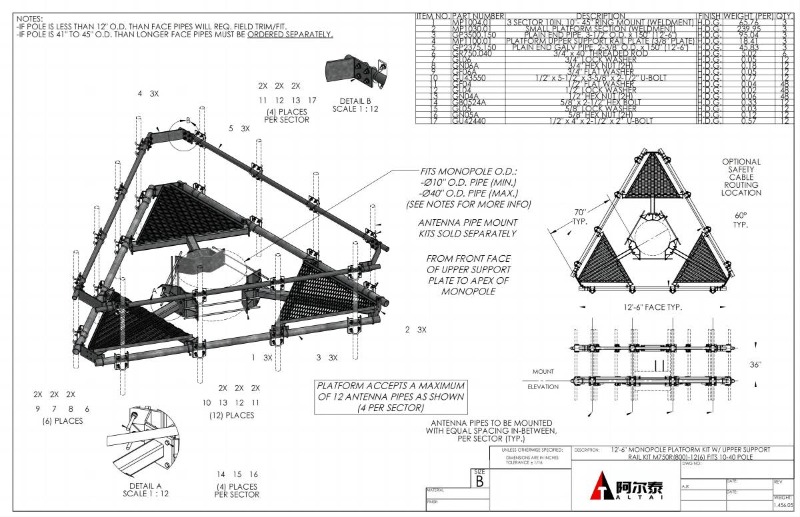
  • Manufacturers like Altai Tower Co., Ltd. provide 6 antenna brackets and 1 platform per tower, allowing flexibility in mounting equipment .

  • Custom designs for aesthetic integration (e.g., landscape-friendly monopoles) are available to meet urban planning requirements .

  • hdg monopole steel telecom tower


Learn more at www.alttower.com


Contact Us


telecom tower supplier

The Difference between Angle Steel Tower and Tubular Steel Tower

2025-03-14

When comparing angle steel towers and tubular steel towers for telecommunication or power transmission applications, key differences arise in their design, structural properties, installation, cost, and suitability for specific environments. Below is a detailed comparison:

angle steel antenna and microwave tower

1. Material & Design

  • Angle Steel Tower:

    • Constructed from steel angles (L-shaped cross-sections) bolted or welded into a lattice framework.

    • Open, lightweight structure with diagonal bracing for stability.

    • Modular design allows for easy assembly and customization.

  • Tubular Steel Tower:

    • Made of cylindrical or polygonal steel tubes, welded or bolted into a solid, enclosed structure.

    • Smooth, aerodynamic profile with fewer exposed components.


2. Strength & Load Capacity

  • Angle Steel Tower:

    • High strength-to-weight ratio due to lattice design.

    • Better suited for tall heights (e.g., 100+ meters) and heavy loads (multiple antennas, ice/wind loads).

    • Less prone to vibration in high winds.

  • Tubular Steel Tower:

    • Robust monolithic structure ideal for medium heights (e.g., 30–60 meters).

    • Lower wind resistance due to streamlined shape but may require thicker steel for taller installations.


3. Wind Resistance

  • Angle Steel Tower:

    • Open lattice design allows wind to pass through, reducing lateral forces.

    • More susceptible to ice accumulation in cold climates.

  • Tubular Steel Tower:

    • Solid surface creates higher wind drag, requiring stronger foundations.

    • Better performance in icy conditions due to enclosed structure.


4. Installation & Maintenance

  • Angle Steel Tower:

    • Easier to assemble on-site due to modular components.

    • Lightweight sections reduce crane dependency.

    • Maintenance is simpler (e.g., climbing lattice rungs).

  • Tubular Steel Tower:

    • Often pre-fabricated and transported in large sections, requiring heavy machinery (cranes).

    • Limited internal access; maintenance may need external ladders or platforms.


tubular steel antenna tower


5. Cost

  • Angle Steel Tower:

    • Lower material and fabrication costs due to simple steel angles.

    • Higher labor costs for on-site assembly.

  • Tubular Steel Tower:

    • Higher material costs (thicker steel tubes) and fabrication complexity.

    • Lower installation time in some cases (pre-fabricated sections).


6. Aesthetics & Space

  • Angle Steel Tower:

    • Visually prominent lattice structure; may face opposition in urban/residential areas.

    • Requires larger footprint for base and guy wires (if used).

  • Tubular Steel Tower:

    • Sleeker, more modern appearance; easier to camouflage (e.g., painted to blend with surroundings).

    • Compact base, ideal for space-constrained rooftops or urban sites.


7. Applications

  • Angle Steel Tower:

    • Ideal for rural or remote areas requiring tall towers for long-range coverage.

    • Common in power transmission and broadcast applications.

  • Tubular Steel Tower:

    • Preferred for urban rooftops, cellular networks (4G/5G), and sites with aesthetic constraints.

    • Often used for monopole installations in cities.


8. Durability & Corrosion


  • Angle Steel Tower:

    • Exposed lattice joints may corrode faster if not galvanized or coated properly.

  • Tubular Steel Tower:

    • Enclosed design offers better protection against moisture and corrosion.


telecommunication angle steel antenna tower


Comparison Table

Feature Angle Steel Tower Tubular Steel Tower
Design Lattice framework Solid, cylindrical/polygonal tubes
Height Suitability Tall (>100m) Medium (30–60m)
Wind Resistance Lower drag (open structure) Higher drag (solid surface)
Cost Lower material, higher labor Higher material, lower labor
Aesthetics Industrial, visible Sleek, urban-friendly
Maintenance Easier access Requires specialized equipment
Applications Rural, broadcast, power transmission Urban rooftops, 5G, cellular networks


When to Choose Which?

  • Angle Steel Tower:

    • For tall, heavy-duty installations in open areas.

    • Budget constraints with a focus on long-term durability.

  • Tubular Steel Tower:

    • Urban deployments with space and aesthetic limitations.

    • Shorter towers needing minimal visual impact.

--

Both types have distinct advantages, and the choice ultimately depends on site-specific requirements, environmental conditions, and project goals.


Learn more at www.alttower.com


Contact Us


telecom tower supplier

Things to be Mentioned in Angle Steel Telecom Tower Maintenance

2025-03-13
  • Maintaining an angle steel telecom tower is essential to ensure its structural integrity, operational efficiency, and longevity. Here are some key aspects to consider and mention in the maintenance of an angle steel telecom tower:
  • angle steel tower
  • 1. Visual Inspections: Regular visual inspections should be conducted to check for signs of damage, corrosion, rust, loose bolts, or any other structural issues that may compromise the tower's stability.

  • 2. Structural Integrity: Ensure that the tower structure is sound and free from any deformities, cracks, or structural weaknesses that could affect its ability to support antennas and other equipment.

  • 3. Guy Wires and Anchors: Inspect and maintain the guy wires and anchors that support the tower to ensure they are properly tensioned, anchored securely, and in good condition.

  • 4. Antenna and Equipment Maintenance: Check the condition of antennas, coaxial cables, lightning arrestors, and other equipment mounted on the tower to ensure they are functioning properly and are free from damage.

  • 5. Paint and Coating Inspection: Monitor the condition of the tower's paint or coating to prevent corrosion and rust. Touch up any areas where the paint has chipped or worn off to maintain the tower's protective layer.

  • 4 leg angle steel tower
  • 6. Lighting System: Verify the functionality of the tower's lighting system, including aviation lights and obstruction lights, to ensure compliance with aviation safety regulations and visibility requirements.

  • 7. Grounding System: Inspect the tower's grounding system to ensure it is properly installed and maintained, providing protection against lightning strikes and electrical surges.

  • 8. Environmental Considerations: Consider environmental factors such as weather conditions, seismic activity, and local wildlife that may impact the tower's maintenance needs and longevity.

  • 9. Documentation: Keep detailed records of maintenance activities, inspections, repairs, and any modifications made to the tower to track its maintenance history and compliance with regulatory requirements.

  • 10. Safety Procedures: Prioritize safety during maintenance activities by following proper procedures, using appropriate personal protective equipment, and adhering to safety guidelines to prevent accidents and injuries.

  • 11. Professional Inspection: Periodically engage qualified professionals to conduct thorough inspections, structural assessments, and maintenance tasks to ensure the tower's compliance with industry standards and regulations.

  • angle steel tower
  • By addressing these key aspects in the maintenance of an angle steel telecom tower, you can help ensure its continued functionality, safety, and reliability for supporting communication equipment and services. Regular maintenance and proactive care are crucial for maximizing the lifespan and performance of the tower in the long run.


Learn more at www.alttower.com


Contact Us


telecom tower supplier

How To Choose A Industrial Chiller Manufacturer?

2025-03-05

In industrial production and many other fields, chillers play a crucial role. They can precisely control the temperature and ensure the stable operation of equipment. However, with a wide variety of chiller manufacturers in the market, how can you make the right choice?


1. Product Quality is the Core

A high quality industrial chiller should possess efficient cooling capacity, stable operation performance, and a long service life. This requires manufacturers to select high - quality components during the production process. Key components such as compressors, condensers, and evaporators directly affect the overall performance of the chiller. Checking whether the manufacturer has a complete quality inspection system, with every step from raw material receipt to finished product delivery being strictly controlled, is an important criterion for measuring product quality.


2. Rich Industry Experience is Crucial

A manufacturer with many years of industry experience is often more proficient in handling various complex cooling requirements. Through long - term practice, they have accumulated a large amount of technical data and practical cases, and can provide personalized solutions according to the special requirements of different customers. For example, in different industries such as electronic chip manufacturing, chemical reactions, and medical equipment cooling, they have targeted chiller design and application experience.


3. Strong Technical R & D Strength

With the continuous progress of science and technology, refrigeration technology is also constantly innovating. Manufacturers with a strong R & D team can keep up with industry trends and continuously introduce more energy - efficient, environmentally friendly, and intelligent chiller products. For instance, developing new refrigerant application technologies to improve cooling efficiency while reducing the impact on the environment; or adopting intelligent control systems to achieve functions such as remote monitoring and fault early warning, which is convenient for users to operate and maintain.


4. Complete After - sales Service System

The purchase of a industrial chiller is just the beginning. Subsequent maintenance and technical support are equally important. A responsible manufacturer will provide responsive after - sales service. When the equipment fails, professional technicians can be quickly dispatched for repair, reducing downtime and minimizing the losses of customers. At the same time, regular equipment inspections and maintenance guidance services are also provided to extend the service life of the equipment.


Industrial Chiller


Hengde Company: A Trustworthy Chiller Manufacturer

Among numerous chiller manufacturers, Hengde Company stands out. Hengde Company has many years of experience in chiller R & D, production, and sales, and has established a good reputation in the industry.

1. Superior Product Quality:

Hengde Company strictly controls the production process and selects components from internationally renowned brands to ensure that each chiller can operate stably and efficiently. Its products have passed a number of international quality certifications and perform outstandingly in terms of cooling effect and stability.


2. Rich Industry Application Experience:

Hengde Company's chillers are widely used in multiple industries, such as laser processing, injection molding, and food processing. In response to the special needs of different industries, Hengde Company can provide customized solutions to meet the personalized requirements of customers. Such as die casting chiller, rubber processing chiller, marine chillers and etc.


3. Powerful Technical R & D Team:

Hengde Company attaches great importance to technological innovation and continuously increases R & D investment. It has a R & D team composed of senior refrigeration experts and technicians. They are committed to developing new refrigeration technologies and products to enhance the performance and competitiveness of products.


4. Complete After - sales Service:

Hengde Company has established a national after - sales service network to provide 24 - hour online support for customers. Whether it is equipment installation and debugging, operation training, or fault repair, Hengde Company's after - sales service team can respond quickly and provide customers with comprehensive service guarantees.


Industrial Air Chillers


When choosing a chiller manufacturer, comprehensively considering factors such as product quality, industry experience, technical R & D strength, and after - sales service can help you make a wise choice. With its advantages in all aspects, Hengde Company is undoubtedly a reliable partner. If you are troubled by choosing a chiller manufacturer, you may as well learn about Hengde Company. I believe it will bring you a satisfactory answer.


Choose Hengde,Choose Perfect Industrial Chillers!

Mooney Viscometer GT-KR03— Your Comprehensive Guide

2025-03-05

Mooney Viscometer GT-KR03— Your Comprehensive Guide


In the world of rubber manufacturing, ensuring quality and consistency in raw and compounded rubber is critical. This is where the Mooney Viscometer GT-KR03 comes into play. A sophisticated yet essential instrument, the Mooney Viscometer is designed to measure the viscosity and scorch characteristics of rubber materials.

What is the Mooney Viscometer GT-KR03?


The Mooney Viscometer GT-KR03 is a state-of-the-art device used primarily in the rubber industry to determine the viscosity and scorch of both raw and compounded rubber. Viscosity, in this context, refers to the material’s resistance to flow under specific conditions, which plays a vital role in processing rubber. Scorch, on the other hand, indicates the tendency of rubber to undergo premature curing or crosslinking during manufacturing.


Key Applications of the Mooney Viscometer GT-KR03


The Mooney Viscometer is a versatile tool that plays a crucial role across a range of industries. Its primary application lies in rubber manufacturing, but it also extends its benefits to a variety of other sectors:


1. Rubber Manufacturing
Process Control: By measuring the viscosity and scorch characteristics, manufacturers can optimize the mixing and curing processes, ensuring a consistent and high-quality end product.
Quality Assurance: Ensures that raw rubber and compounded rubber meet industry standards, minimizing defects and ensuring performance reliability.

2. Footwear Industry
Material Optimization: In footwear production, the Mooney Viscometer helps manufacturers assess rubber compounds used in soles and other components, ensuring durability, comfort, and functionality.

3. Automotive Industry
Engine Components and Tires: The performance of rubber materials in automotive parts, such as tires and seals, is highly dependent on their viscosity and scorch characteristics. The Mooney Viscometer helps ensure that the rubber compounds used in these applications meet the required specifications.

4. Construction and Mining
Durability Testing: Rubber used in construction materials, machinery seals, and mining equipment needs to withstand extreme conditions. The Mooney Viscometer ensures that the rubber compounds used in these environments possess the necessary properties for durability and performance.

5. Household and Transportation Items
Consistent Quality: Items such as rubber seals, gaskets, and hoses in household and transportation products benefit from the precision and consistency ensured by Mooney Viscometer testing.

6. Research and Development
Innovative Materials: The Mooney Viscometer is an essential tool in R&D settings, providing detailed data on the properties of new rubber formulations and allowing researchers to fine-tune compositions for specific applications.

Key Features of Mooney Viscometer GT-KR03


1. Accurate and Precise Measurements

Our Mooney Viscometer is designed to deliver highly accurate readings of rubber viscosity and scorch, ensuring precise data for manufacturing and quality control purposes.

2. User-Friendly Interface
Equipped with an intuitive interface, the rubber testing instrument GT-KR03 allows for easy operation and quick access to critical data. Its clear digital display provides real-time results, allowing operators to monitor changes in material properties during processing.

3. Durable Construction
Built to withstand the demanding environments of rubber production facilities, the Mooney Viscometer GT-KR03 is designed for long-term durability. Its rugged construction ensures reliability even in harsh operating conditions.

4. Versatility
This mooney viscosity machine is compatible with a wide range of rubber materials, making it suitable for use across different industries, from automotive to footwear to cons truction.

5. Improved Process Control
By providing detailed insights into the viscosity and scorch behavior of rubber, the Mooney Viscometer enables manufacturers to make informed adjustments to their processes, resulting in optimized material properties and enhanced product quality.

6. Efficient Data Management
The GT-KR03 rubber mooney viscosity offers advanced data management features, allowing for easy storage and retrieval of test results. This makes it an ideal tool for tracking performance over time and maintaining quality consistency.

By investing in the Mooney Viscometer GT-KR03, manufacturers gain a powerful tool for quality control, process optimization, and research and development—ensuring that their rubber products meet the demands of both today’s and tomorrow’s industries.

Enhance Luggage Quality with the GT-LC02 Vibration Impact Testing Machine

2025-03-05
Enhance Luggage Quality with the GT-LC02 Vibration Impact Testing Machine

In the competitive world of luggage manufacturing, ensuring that products meet the highest standards of durability is crucial. One of the key factors in determining the long-lasting performance of a suitcase, backpack, or other types of travel bags is their ability to withstand the rigors of travel, including vibrations and impacts. This is where the Luggage Vibration Impact Testing Machine GT-LC02 comes into play.

Luggage Vibration Tester

Why Luggage Durability Matters


Luggage is subjected to constant strain during its lifetime. From being tossed onto conveyor belts at airports to being packed, handled, and dropped, it faces a range of potential damages. Handles may become detached, stitching may unravel, or the overall structure may weaken over time.

Applications of the GT-LC02 Luggage Vibration Tester

The GT-LC02 Luggage Vibration Tester is suitable for a wide range of luggage products, including:
  • Suitcases: Both hard and soft-shell suitcases can benefit from vibration and impact testing, particularly around areas like the handles and zippers.
  • Backpacks: The durability of straps, stitching, and overall construction can be assessed using the GT-LC02 Luggage Vibration Tester.
  • Travel Bags: Large travel bags often face similar stresses, and testing with the GT-LC02 Luggage Vibration Tester helps ensure they maintain their structural integrity.
  • Business Cases and Totes: The machine is also ideal for testing the sturdiness of bags designed for professional use, ensuring they can withstand the daily demands of business travelers.

Features of the GT-LC02 Suitcase Vibration Impact Tester


  • Customized Test Settings: The GT-LC02 Suitcase Vibration Impact Tester features a user-friendly control panel with settings for starting, stopping, pausing, counting, and clearing. These functions help manufacturers manage and track the testing process accurately, ensuring consistent results.


  • Automatic Shutdown: The machine stops automatically when the set number of cycles is reached or if the backpack strap is damaged during testing. This feature helps ensure that tests are not prolonged unnecessarily, saving time and effort while also providing a safety mechanism to avoid further damage to the test sample.


  • Oscillating Impact Simulation: The GT-LC02 Suitcase Vibration Impact Tester replicates the impact forces that a bag might experience during travel. The machine’s cylinder mechanism drives electromagnets to create free impacts under the force of gravity. This results in an oscillating impact rate of 20±2 times per minute, a speed that is optimal for simulating the stresses experienced during travel and handling.


  • Accurate and Repeatable Results: With the ability to cycle from 0 to 999,999 impacts, the GT-LC02 Luggage Vibration & Impact Tester Suitcase Vibration Impact Tester provides manufacturers with the flexibility to conduct thorough testing, ensuring that products can withstand prolonged exposure to stress.

For more information on the GT-LC02 Luggage Vibration & Impact Tester and other testing solutions, visit GESTER's website and explore their comprehensive range of products designed to meet the needs of modern manufacturers.

How Does the GT-F50BA Salt Spray Chamber Ensure Accurate Corrosion Testing?

2025-03-05
How Does the GT-F50BA Salt Spray Chamber Ensure Accurate Corrosion Testing?

Corrosion testing is a cornerstone of quality assurance in industries where materials face exposure to harsh environments, from automotive manufacturing to aerospace engineering. The GT-F50BA Salt Spray Chamber has emerged as a trusted tool for simulating corrosive conditions and evaluating material durability. Let’s break down its design, functionality, and operational advantages.

salt spray test chamber

The Corrosion Testing

Corrosion occurs when materials degrade due to chemical reactions with their environment, particularly in the presence of moisture, oxygen, and salts. To predict real-world performance, standardized tests like the Neutral Salt Spray (NSS) test simulate accelerated corrosive conditions. The GT-F50BA salt spray cabinet is engineered to meet these testing requirements while adhering to global standards such as ASTM B117, ISO 3768, and JIS Z-2371, ensuring compatibility with international quality benchmarks.

Key Design Features of the GT-F50BA Salt Spray Cabinet

Accuracy in corrosion testing hinges on consistent environmental controls and reliable equipment performance. Here’s how the GT-F50BA salt spray cabinet achieves this:

1. Precision Temperature Regulation
The salt spray corrosion test chamber maintains two critical temperature zones:

  • Test Chamber: Set at 50°C (±1°C) to replicate a stable corrosive environment.
  • Pressure Tank: Heated to 63°C (±1°C) to generate a uniform salt spray mist.

This dual-zone control prevents fluctuations that could skew test outcomes, ensuring reproducibility across multiple trials.

2. Automated Spray System
The salt spray test chamber’s atomizer produces a fine, evenly distributed salt mist at a controlled pressure of 1 kg/cm². This consistency is vital for ensuring all test specimens receive identical exposure, eliminating variables that might compromise results.

3. Sealed Testing Environment
A water-sealed lid design prevents salt spray leakage, maintaining the chamber’s internal environment. This airtight seal is critical for sustaining the required humidity and spray density throughout the test cycle.

4. Intuitive Control Interface
The digital control panel allows users to program test duration, temperature, and spray intervals. Automated alerts notify operators of low water levels or test completion, reducing manual oversight and human error.

5. Durable Construction
Built with corrosion-resistant materials like PVC and reinforced plastics, the chamber withstands prolonged exposure to salt solutions, ensuring long-term reliability and minimal maintenance.

Step-by-Step Testing Process

The GT-F50BA salt spray test chamber’s user-friendly workflow simplifies testing while maintaining rigor:

1. Solution Preparation
A 5% sodium chloride solution is prepared using distilled water. The salt spray tester’s hydrometer and pH test paper (included) verify the solution’s concentration and acidity, ensuring compliance with testing standards.

2. Specimen Setup
Test samples—such as coated metal panels or electronic components—are mounted on non-reactive racks inside the chamber. Proper spacing ensures unobstructed spray coverage.

3. Parameter Configuration
Operators set the desired temperature, spray duration (e.g., 24–1,000 hours), and test intervals via the control panel. The system auto-fills water reservoirs to maintain pressure and humidity.

4. Test Execution
Once initiated, the salt spray tester generates a continuous salt spray. Users can periodically collect solution samples using the provided measuring cylinder to check pH levels (ideally 6.5–7.2) and spray volume (1–2 mL/hour).

5. Post-Test Analysis
After the test concludes, the chamber automatically purges residual mist. Specimens are rinsed, dried, and evaluated for corrosion signs (e.g., rust, blistering) using microscopy or weight-loss analysis.
Tags