In the fields of non-fired bricks, concrete blocks, and paving brick equipment, static pressing and vibration molding are two mainstream molding processes. They differ significantly in their compaction mechanisms, equipment structure, energy consumption, noise levels, product quality, and production costs, directly determining production line efficiency, product qualification rates, and long-term operational benefits. This article systematically compares them from the perspectives of principle, performance, application scenarios, and selection, helping brick machine users accurately match efficient molding solutions.
I. Fundamental Differences in Molding Principles
The core difference between static pressing and vibration molding technologies lies in the different energy sources for brick compaction.
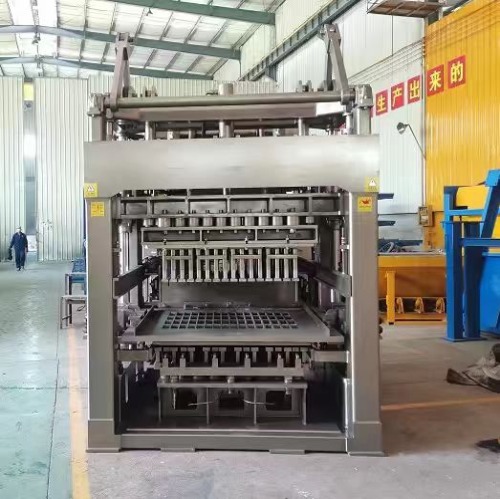
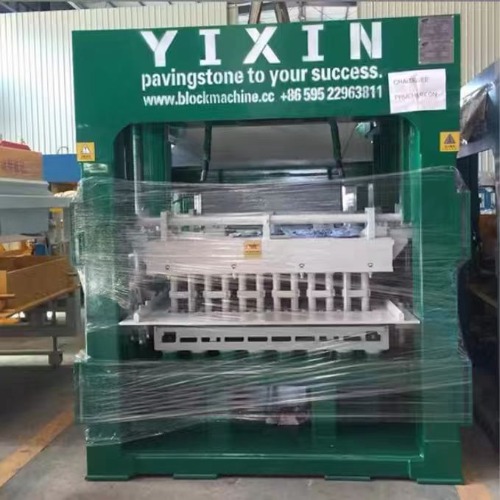
Static pressing technology uses a hydraulic transmission system to compress concrete raw materials into brick blanks through high-pressure pressing. Its pressing process is stable, with uniform pressure distribution, and can achieve bidirectional pressurization. Taking a typical fully automatic hydraulic brick press as an example, it adopts a staged pressurization process, with optimized pressure and time design in three stages: pre-pressing, forming pressure, and holding pressure. Multiple venting operations can be set during the pressing process to ensure uniform brick blank compaction. This "static pressing" method is highly adaptable to different raw materials and can produce high-quality blocks.
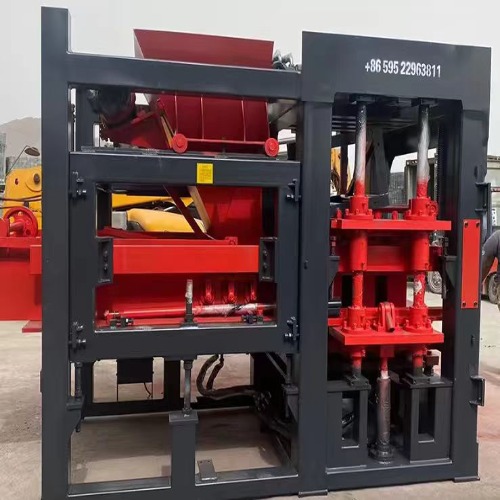
Vibration molding technology primarily relies on vibration energy to compact the material. During block molding, a vibration platform generates high-frequency vibration, causing the concrete raw materials to liquefy, degas, and compact during vibration. Depending on the vibration location, it can be divided into table vibration and mold vibration—the vibration device of a table vibration machine is mounted on a vibration table, while the excitation device of a mold vibration machine is directly mounted on the mold box. During molding, the pressure head is in a low-pressure floating state, relying mainly on vibration to achieve compaction of the concrete mixture.
II. Comprehensive Comparison of Key Performance Dimensions
Product Quality and Precision
Static pressing: Uniform pressure, no segregation, dimensional tolerance up to ±0.5mm, high density consistency, small strength dispersion; suitable for high-strength bricks, permeable bricks, curb stones, and precision blocks, yield rate ≥98%, smooth surface without pitting.
Vibration molding: Density is affected by amplitude, frequency, and material distribution, easily leading to material shortages at edges and corners, and uneven density. Suitable for ordinary standard bricks and hollow blocks, meeting conventional building strength requirements, but the surface texture is slightly inferior to static pressing.
III. Comparison of Production Efficiency and Operating Costs
From a production efficiency perspective, both technologies have their advantages and disadvantages:
Static pressing brick machines have a longer molding cycle, but produce high-quality bricks. They require no pallet curing and can be directly stacked, saving curing time and pallet investment costs. They are highly automated, equipped with a PLC fully automatic control system, enabling unattended production. Although the single cycle time is slightly longer, the elimination of subsequent curing and turnover steps makes the overall output efficiency not low.
Vibration molding machines have a short molding cycle and high output; for example, some models can produce 26 standard bricks every 25 seconds. However, the bricks need to be placed on pallets for curing, resulting in a longer curing cycle and pallet wear, which is a significant ongoing investment. Furthermore, vibration equipment has high requirements for the working surface, leading to a larger initial investment.
IV. Applicable Scenarios and Selection Priority
Scenarios Prioritized for Static Press Molding:
1. Production of high-value-added products such as high-strength permeable bricks, municipal curb stones, high-precision blocks, and thermal insulation wall panels;
2. High solid waste content and large raw material fluctuations, requiring stable density and high yield;
3. Factory area near residential areas, with strict requirements for noise and environmental protection;
4. Pursuing large-scale, high-end production lines with long-term low energy consumption, low mold wear, and high stability.
Scenarios Prioritized for Vibration Molding:
1. Primarily producing standard bricks, ordinary hollow blocks, and other general building materials, focusing on volume;
2. Limited initial investment, aiming for rapid production and quick return on investment;
3. Stable raw materials, mainly sand, gravel, and cement, with mature and easily controllable processes;
4. High requirements for peak production capacity, with single-line output taking precedence over single-product added value.
V. Summary
Static press molding represents a high-quality, low-energy-consumption, and environmentally friendly approach, suitable for green building materials and solid waste resource utilization upgrades; vibration molding adheres to the basic principles of high cost-effectiveness, high capacity, and universal accessibility, meeting the needs of mass-market building materials. The two are not substitutes, but rather complementary and adaptable to different scenarios.
For automatic brick-making machine users, there is no absolute best, only the most suitable: focusing on product positioning, constrained by raw materials and budget, and prioritizing environmental protection and efficiency, is the only way to select a truly cost-effective, efficient, and sustainable molding solution.